
.
Never mind whatever we said last time, that was then, this, once again is about this week and next and cake and yes you are right, the so called season is coming into focus, here we go with five more art things. five art things, five more art things happening somewhere around right now (or any moment now). Five art shows to check out in the coming days. An (almost) weekly round up of recommended art events. Five shows, exhibitions or things we rather think might be worth checking out. Mostly London things for that is where we currently operate and explore, and like we said last time, these five recommendations come with no claims that they are “the best five” or the “Top Five”, we’re not one of those annoying art websites that ignore most things whilst claiming to be covering everything and proclaiming this or that to be the “top seven things” or the “best things this weekend”. This Five Things thing is simply a regular list of five or so recommended art things happening now or coming up very soon that we think you might find as interesting as we think we will…
And we should add, that entry to these recommended exhibitions and events, unless otherwise stated, is free.
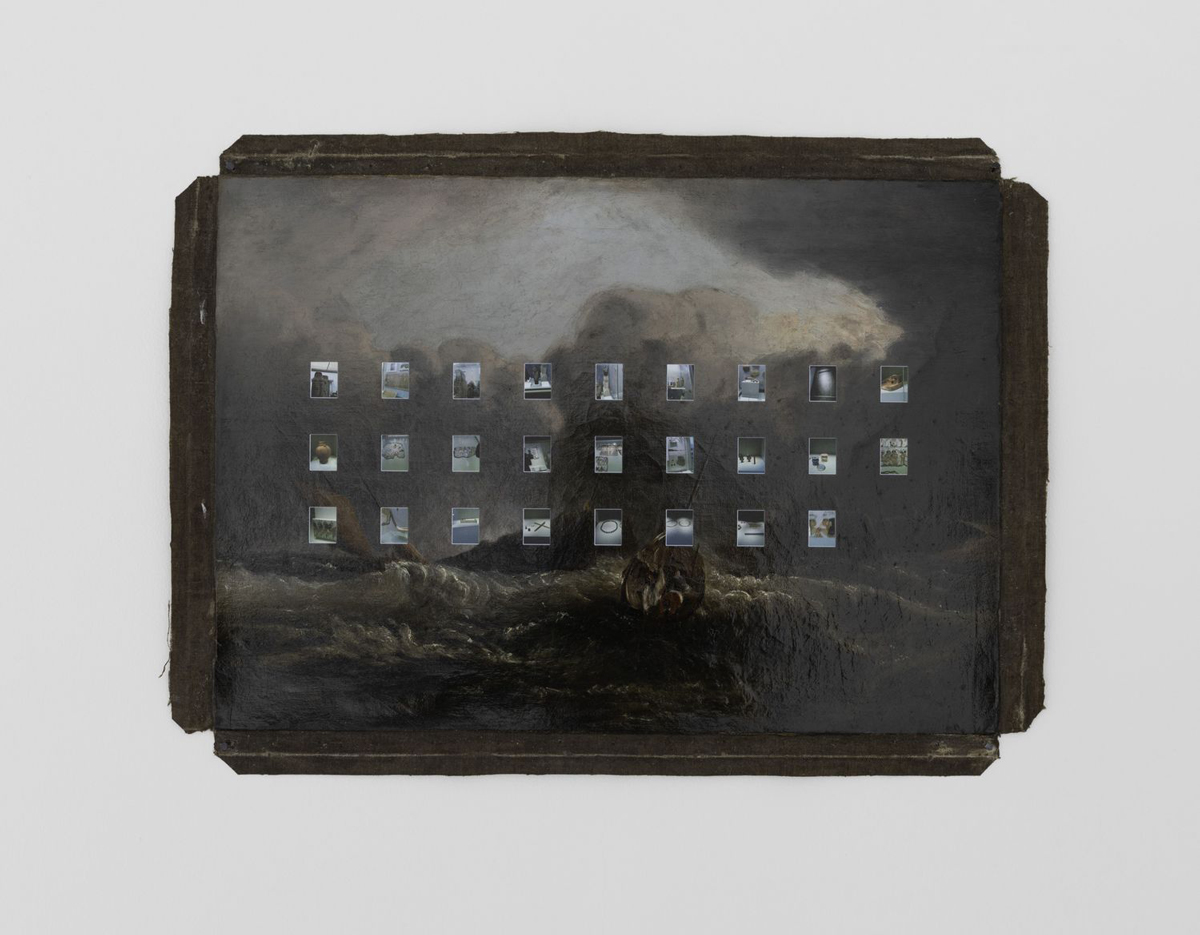
1: Paul Stephenson – Search History at StolenSpace – September 8th until October 1st with an opening night on 7th September 6pm until 8pm if this page goes up in time (hey, we’re over heating in here, that and getting ready for the Art Car Boot Fair, the clapping with one hand process of constantly bigging up shows at StolenSpace (yes they do put on lots of more than decent art shows) will have to take a bit of a back seat this week in terms of posting before the opening night (hey, many years of supporting the space and they’ve never said thanks even once, so tough if this goes up after the open night has damn well closed). “StolenSpace Gallery is excited to welcome back Paul Stephenson for his third solo exhibition with us” so constantly good if soewhat unfriendly aloof East London gallery say.
“Stephenson’s practice centres around working on original works of art by other artists. Most often this involved superimposing photographic images directly onto oil paintings that the artist has purchased at auction. Layering new imagery and photographs taken around the very museums and galleries these paintings would have been displayed in, Stephenson is continuously working to layer stories and perspectives in his work, as though he is DJ-ing with the paintings themselves. The identity of the first artist of the oil paintings is always known and this allows a form of collaboration or dialogue between Stephenson and the original artist, and with the oil painting itself which stands in for the original artist acting as a quasi-persona. The combination of the photographic and oil painting in the work constructs dialogues between the two images as the viewer’s eye waivers between them. Unlike other artworks that ‘disrupt’ existing works, Stephenson is not serving up one-liners, or characters that intrude into the world of the poster/oil painting. Instead, the combination is of two fully autonomous images, materials and visual planes vying for primacy. This opens up an uneasy space between them that is inherently liminal”.
Stolenspace is at 17 Osborn Street, London, E1 6TD (top end of Brick Lane to you and me, just around the corner from the bloated Whitechapel Gallery. They say the gallery is open Tuesday to Sunday 11am until 6pm (5pm on Fridays). There is a Sofia Enriquez show running at the same time at the space, September 8th until October 1st

2: Tenant of Culture, Ladder at Soft Landing – We have actually been to this show already, it opened here in East London earlier this evening, Thursday 7th September and runs at the rather fine gallery (the Velma Gold space in a former life), it is a rather rewarding show, more about it later. The show opened earlier this evening and runs until 21st October in the nice big East London space that kind of hides away with no real indication that it is actually there…
“In Ladder, Tenant of Culture presents a new body of work that examines the perceived dichotomy between destruction and decoration, interrogating how the aesthetic of waste has, for centuries, been appropriated within the fashion industry. These new wall-based and suspended works highlight the dissonance between the creation of physical waste and the aestheticization of damage.
In the exhibition, the artist expands her approach to undoing material, utilising traditional craft techniques based on the extraction or destruction of threads and fibres. These processes include devoré, open work embroidery and slicing as well as deconstructive methods developed through material experimentation to reference the practice in the garment industry of intentionally creating rips or slashes in previously undamaged clothing and accessories. The artificially ripped pair of jeans may be the most well-known contemporary example, but for centuries textile workers slashed garments as both a political act of resistance and a mechanism of control.
The cultural significance of the destruction of clothing is grounded in several notable moments in fashion’s industrial and stylistic history. The “cutters” movement of the mid 18th century utilised slashing as an act of protest, while the Spitalfields silk weavers engaged in campaigns of destroying each other’s work in a battle to stabilise wages. During the European Renaissance, the decorative technique of cutting slits in the outer layer of a garment to expose the fabric underneath was inspired by the distressed clothing of soldiers returning from battle, serving to visually distinguish political allegiances and social hierarchies. Today, the common approach of luxury brands is to slice unsold luxury goods to prevent value deflation; an economic strategy to create exclusivity through scarcity. Tenant of Culture explores this inheritance, disassembling and rebuilding manufactured garments to look at the politically charged treatment of textiles, examining the ways in which ideological frameworks with wide social implications materialise in methods of production, circulation and marketing of apparel.
The works in Ladder examine the complex relation between fashion trends and their manufacturing processes. They aim to confront the cognitive dissonance between our individual relationship with clothes versus the global system in which they are produced by offering multiple perspectives – between individual desire and industry, transparency and concealment, the brand new and the discarded. The exhibition is accompanied by a text from Eilidh Duffy, available as part of a free, limited edition oversize pamphlet.”
Tenant of Culture is the artistic practice/name of Hendrickje Schimmel (b. 1990, Arnhem), and artist who lives and works in London. The artist’s most recent solo exhibition IN SITU was held at Museum of Contemporary Art, Antwerp (2023). Prior to this, the artist’s first UK institutional solo exhibition, Soft Acid opened last year at Camden Art Centre, London (2022). Soft Acid will be exhibited this year as part of the British Textile Biennial 2023.
Soft Landing is found at 6 Minerva St, London, E2 9EH – just off the Hackney Road not that far from Cambridge Heath overground station. The show has jsut opened and runs until 21st October, the gallery is open Wednesdays to Saturdays, midday until 6pm although be warned, it is one of those galleries that aren’t big on welcome mats or signs to let you know where they are, one of those ring our doorbell if you can find it and then hope someone answers kind of places that East London specialises in.
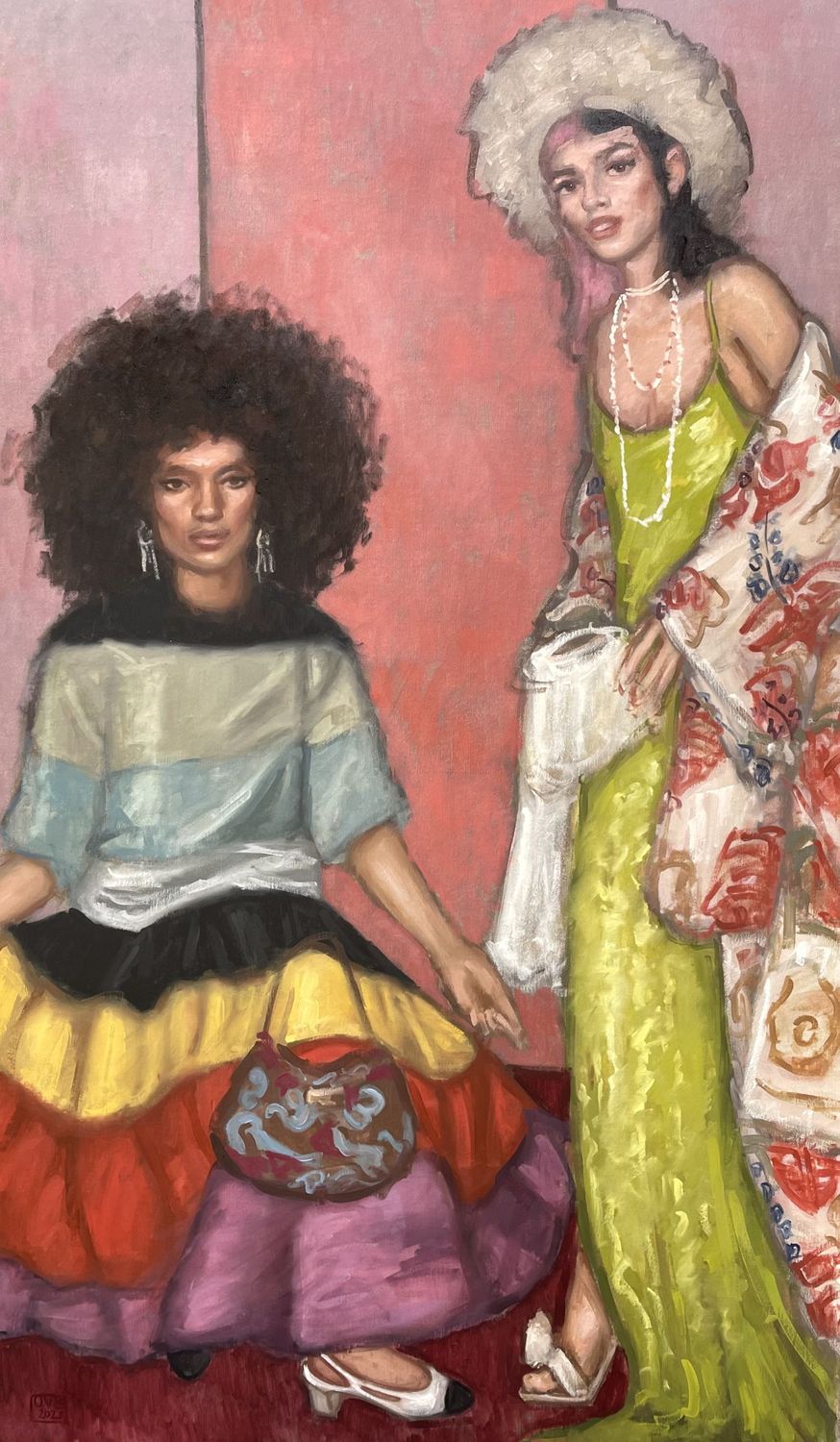
3: Olivia Valentine, The Pink Cloud at Gillian Jason Gallery – Open now and running until the 30th September 2023, – Gillian Jason Gallery is delighted to present their first solo show with UK-based figurative artist Olivia Valentine, ‘The Pink Cloud.’ Presenting a series of intimate portraits depicting her support network whilst recovering from addiction, ‘The Pink Cloud’ references the term used for the stage of early recovery that involves feelings of euphoria. Valentine explores the joy of recovery, capturing her sitters’ narratives.
Having trained in Florence for four years at Charles Cecil Studios, Valentine’s technique is informed by the practice of old masters such as Van Dyke, Velasquez, and Titian. In her own journey of self-expression, she steps outside the traditional boundaries of portraiture and captures the chemistry between the artist and the model. Through her work, Valentine aims to advocate the importance of robust mental health, painting the little moments of cheerful nuances and focusing on the feelings of hope, serenity and elation of her sitters”.
Gillian Jason Gallery is at 19 Great Titchfield Street, London, W1W 8AZ. The gallery is open Tuesday to Saturday, 11am until 6pm (4pm on Saturdays)
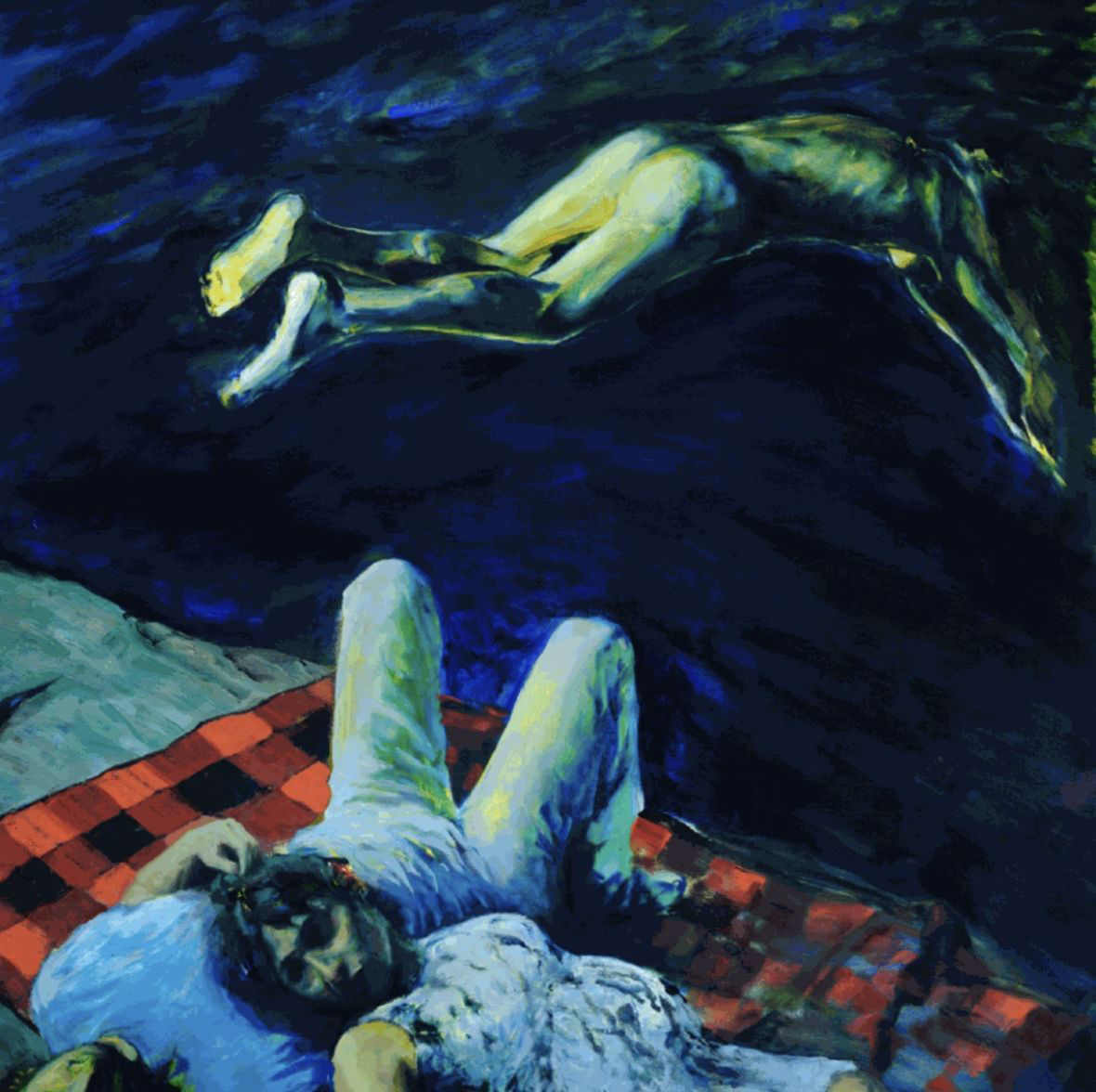
4: Noah Beyene, Head First at Addis Fine Art – “We are thrilled to be presenting Head First, a debut exhibition by Noah Beyene, opening in our London gallery’s AFA Project Space on Thursday, 7 September” so said the gallery. The show runs until 30th September.
“Beyene was born in Stockholm and is a recent graduate of the Slade School of Fine Art. With a background in photography and as a lighting director, Noah’s figurative paintings are in constant and conscious dialogue with the history of image-making. His work engages with the relationship between the human form and psychological states, exploring the space between and intersection of internal and external worlds. Through his honest portrayal of domestic life, Noah illuminates the magic and mystery of the quotidian”.
Addis Fine Art is at 21 Eastcastle Street, London, W1W 8DD. The gallery is open Tuesday to Saturday, 11am until 6pm (midday opening on Saturdays) The Noah Beyene show is open now and runs until September 30th
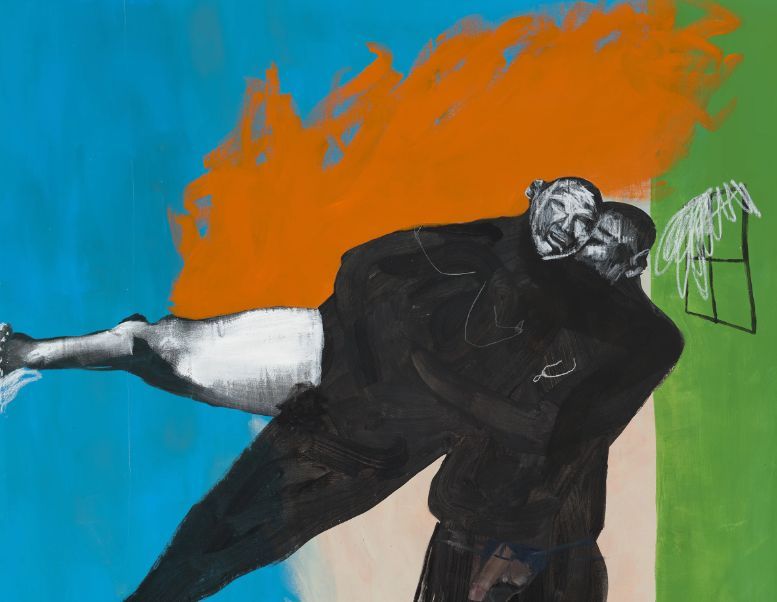
5: Shadi Al-Atallah, Fistfight at Guts Gallery – opening this Friday 8th September at the rather unfriendly space called Guts Gallery, an art space that run by the latest set of aloof too-cool-for-you gatekeepers. Bad attitude apart, they do put on some interesting art on their walls, they do kind of back things up even if they are the most unfriendly of all the unfriendly East London galleries. This Shadi Al-Atallahshow looks like it it might well be worth a walk down that rather great street by all the railway arches and the car repairs shops that are fast becoming a thing of the past here in Hackney. Guts does stink a little too much of art school but hey who needs art spaces to be friendly, lets go see the art. The show runs from 8 Sep 2023 until 25 Oct 2023 with an opening on Friday 8th 6pm until 9pm.
“huge arms gripped huge arms, foreheads crashed like wild bulls, the two men staggered, they pitched against houses, the doorposts trembled, the outer walls shook, they careened through the streets, they grappled each other, limbs intertwined, each huge body straining to break free from the other’s embrace. Finally, Gilgamesh threw the wild man and with his right knee pinned him to the ground. His anger left him. He turned away. The contest was over.” The Epic of Gilgamesh, trans. Stephen Mitchell, 2004
Guts Gallery is excited to present Fistfight; a solo exhibition by Shadi Al-Atallah which explores the visceral and psychological nature of violence through the lens of mythology and storytelling. Inspired by the spectacular and monumental fights in ancient texts like The Epic of Gilgamesh, the figures in Fistfight are locked into intimate but seismic violent struggles. Within these paintings, arms and legs twist and tangle around each other, fists strike out and pummel against expanses of skin, mouths are contorted into toothy, exhausted grimaces and pairs of feet adjust and readjust on floors and walls in an intricate dance to keep balance. In the chaos of violence and destruction, the physical distinctions between each of Al-Atallah’s figures starts to disintegrate. Here, wrestling becomes a brutal, but cathartic, form of quasi-sexual communion as grappling bodies blend and genitalia fuses together. As a result, Al-Atallah’s painted forms are disruptive; they embody a non-normative, boundary-pushing ambiguity.
In Fistfight, Al-Atallah is fascinated by spaces of controlled violence; they are intrigued by spaces like wrestling rings where dynamic displays of force and brutality are permitted and encouraged. Al-Atallah recognises that, in these spaces, the dynamism and vigour of the body takes centre stage: gone are all inhibitions, one’s mind rests solely on the idea of overcoming one’s opponent through a demonstration of sheer power and strength. Using images of vintage wrestling as a basis for many of the compositions, the works within Fistfght often record the miniscule but singular and decisive moment before the climax of a battle. Moments like the sudden but minute shift in balance that sends the other fighter tumbling to the ground are captured and frozen in time; lending the works a sense of gravity that compares to the sculptural depictions of the wrestling match between Hercules and Antaeus.
Throughout Fistfight, Al-Atallah explores the rigid distinction between the spaces where violence is permitted and the spaces in which it is not. Almost all of Al-Atallah’s battles are located within the domestic sphere: plug sockets, window panes, chairs and tables, standing lamps, shelves and houseplants (to name a few) are delineated in thin, clear lines that almost protrude from the vast washes of bright colour in the background of each composition. By locating each of these wrestling matches in the confined and claustrophobic domestic space, Al-Atallah brings the impact of violence, quite literally, much closer to home. However, it is clear that these spaces are not one-to-one facsimiles of interior spaces in the real world. Instead, these spaces appear more like half-remembered evocations of domestic spaces and the figures that occupy them like ghostly apparitions. In this way, Al-Atallah’s compositions take on a more cerebral, dreamlike and, crucially, emotional quality. Each of the canvases within Fistfight become their own psychological wrestling ring; each canvas is a space in which Al-Atallah’s interior world can be mapped out. The bodies that thrash and grapple each other can be read as the inner demons and wayward thoughts that battle to take control of the artist’s psyche. Through the act of painting, the artist can purge themselves of these torments. Here, Al-Atallah’s anxieties are externalised, given human form and let loose on the canvas to do battle there for the audience to see, rather than in the solitude of the mind.
Guts Gallery is found at Unit 2 Sidings House, 10 Andre Street, Hackney, London, E8 2AA. You find the space up on the second floor of an ugly new build block, right by Chrome and Black – The space is open Tuesdays to Saturdays, 11am until 6pm.
.
.

Before we end this week’s Five Art Things feature and before the so called London Art Season does kick in, we really should say something about the passing of Angela Flowers during the Summer. We’ve been to many a wonderful exhibition at her various Flowers Gallery spaces of the years, we’ve especially enjoyed shows at the always beautifully curated almost always rewarding East London space on Kingsland Road in recent years. There’s been some glorious shows, and never a charge to get in, something that should never ever be taken for granted, thank you Angela.
Here’s how Artlyst reported the news back in August
“Angela Flowers, a leading British art gallerist and businesswoman who significantly contributed to promoting and developing contemporary art in the United Kingdom, has died aged 90. Born Angela Holland on 19 December 1932, she is best known for founding and running the Angela Flowers Gallery, a prominent and influential gallery in London.
Angela Flowers’ (Died 11 August 2023) journey in the art world began in the early 1970s when she opened her first gallery space in London’s West End. The gallery quickly gained a reputation for showcasing emerging and established artists and became a hub for contemporary art exhibitions and events. Flowers was known for her keen eye for talent and commitment to promoting diverse artists working in various styles and mediums.
Under Flowers’ leadership, the Angela Flowers Gallery played a crucial role in promoting the work of British artists such as Patrick Hughes, Terry Frost, and Paula Rego, as well as Scottish figurative artists like Peter Howson and John Bellany. The gallery’s exhibitions often focused on contemporary art movements, including abstraction, figurative art, and various avant-garde styles.
Throughout her career, Angela Flowers also actively advocated for the arts in the UK. She was involved in various cultural organisations and initiatives, contributing to the growth of London’s art scene. Her gallery became known for nurturing young artists, giving them a platform to showcase their work, and helping shape many talented individuals’ careers.
The Angela Flowers Gallery expanded over the years, opening multiple spaces in London and playing a pivotal role in developing the Shoreditch arts district in East London. The gallery’s reputation for its dedication to innovative and thought-provoking exhibitions attracted collectors, art enthusiasts, and critics alike.
Angela Flowers’ impact on the art world was widely recognised, and she received several honours and awards for her contributions.
Flowers Gallery currently represents over 50 international artists and artists’ estates, working with a wide range of media. Over the past five decades, the gallery has presented over 900 exhibitions across its global locations, supporting the production of artists’ publications and the presentation of works by gallery artists in art fairs, public galleries, museums and institutions worldwide.
The gallery programme includes major annual summer survey shows and renowned recurring exhibitions such as Artist of the Day and Small is Beautiful. These have formed a critical high-profile platform for many emerging and under-recognised contemporary artists.
The Flowers Gallery continues to operate as a significant cultural institution. Angela Flowers’ legacy as a pioneering gallerist and advocate for contemporary art remains integral to the UK’s cultural history. Her efforts have left a lasting impact on artists, collectors, and the art community as a whole, contributing to the vibrant artistic landscape of the country. Her son Matthew who took over the gallery’s running some years ago will continue the brand”.
 THE ORGAN
Leave a comment