


.
Roger Kite, Nature’s Tracks atBenjamin Rhodes Gallery, East London – There’s probably little point in covering this Roger Kite exhibition now. Should have got there well before the final day of a show that has been running since early October, there is no excuse, bad, sorry. Hey, we get out there and (mostly thanklessly) support more art shows and galleries than most people do, especially the smaller spaces and Benjamin Rhodes Gallery has had some strong shows on this year – Richard Kenton Webb, that excellent Tricia Gillman exhibition back in March – there is no excuse for not getting there and covering this exhibition while it was still happening rather than now, the week after it has closed.
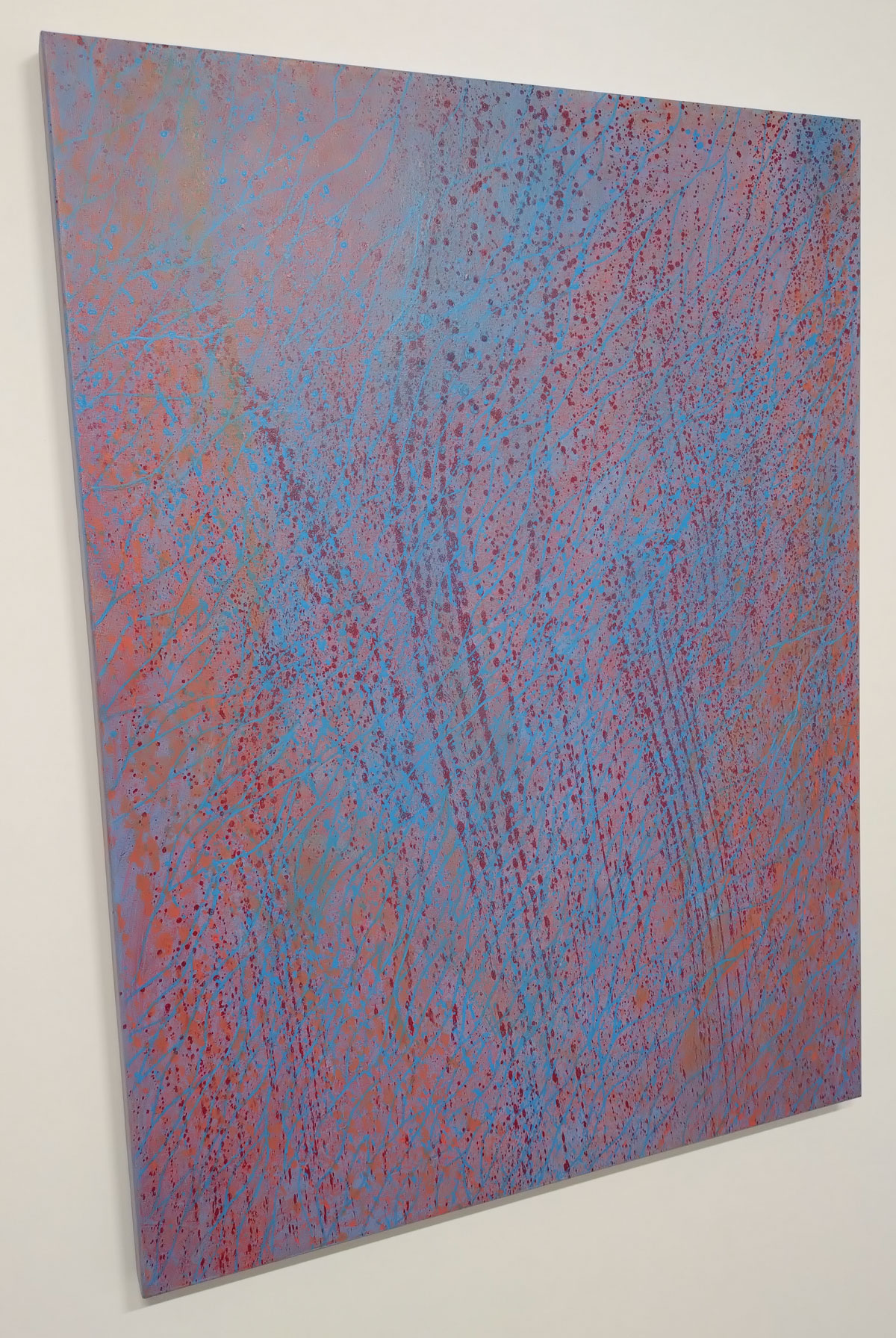
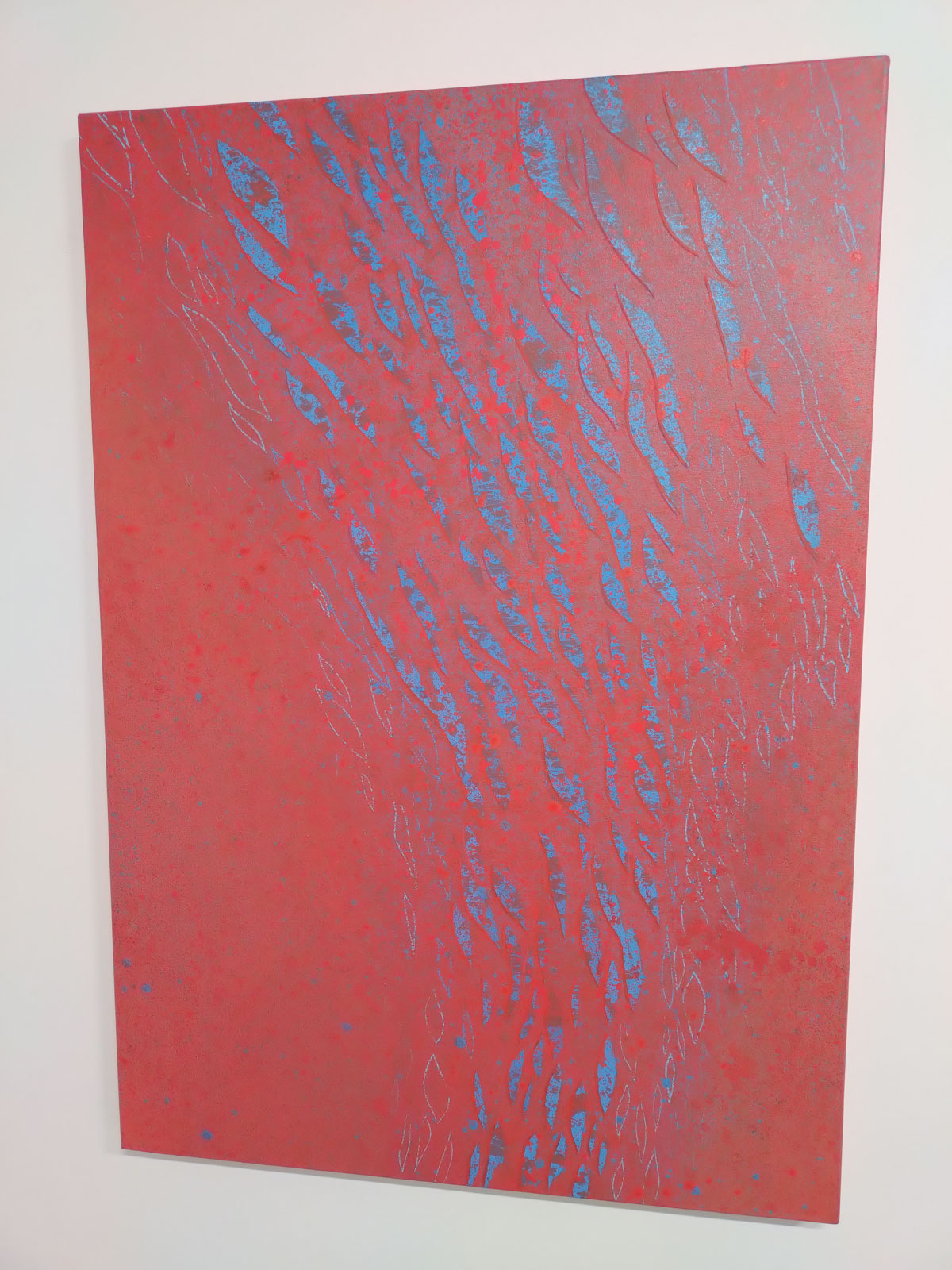
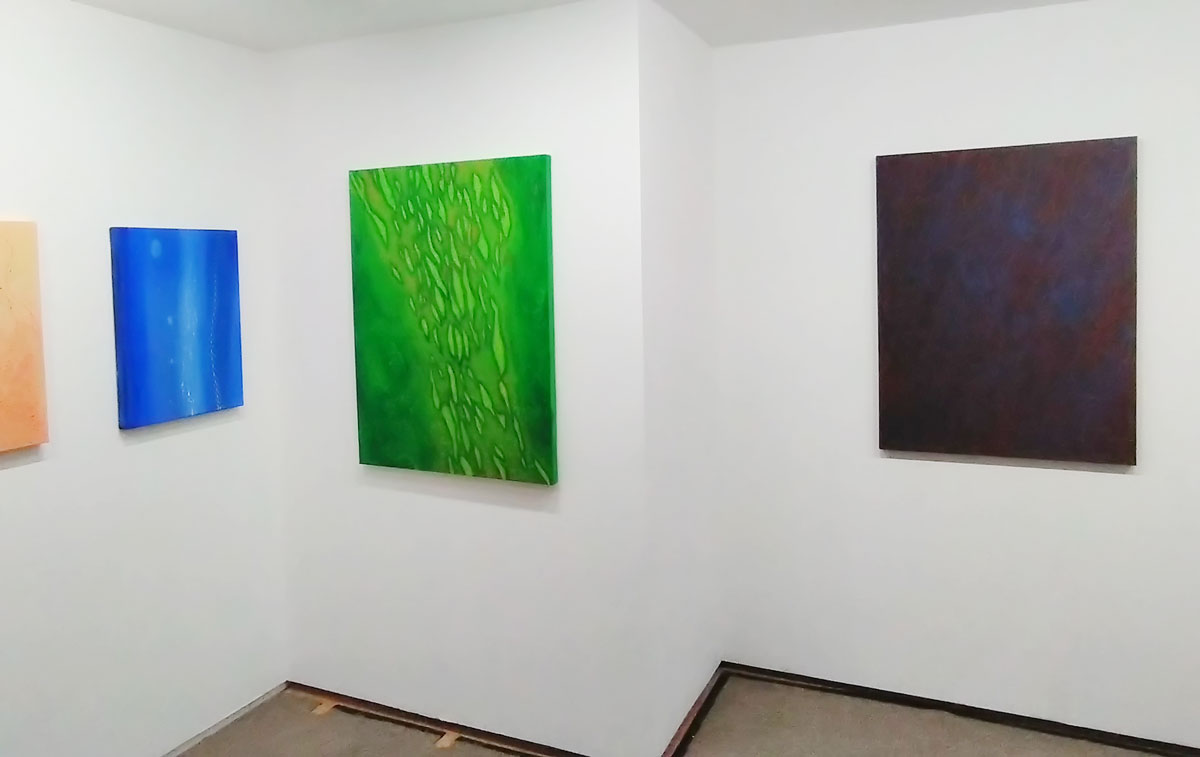
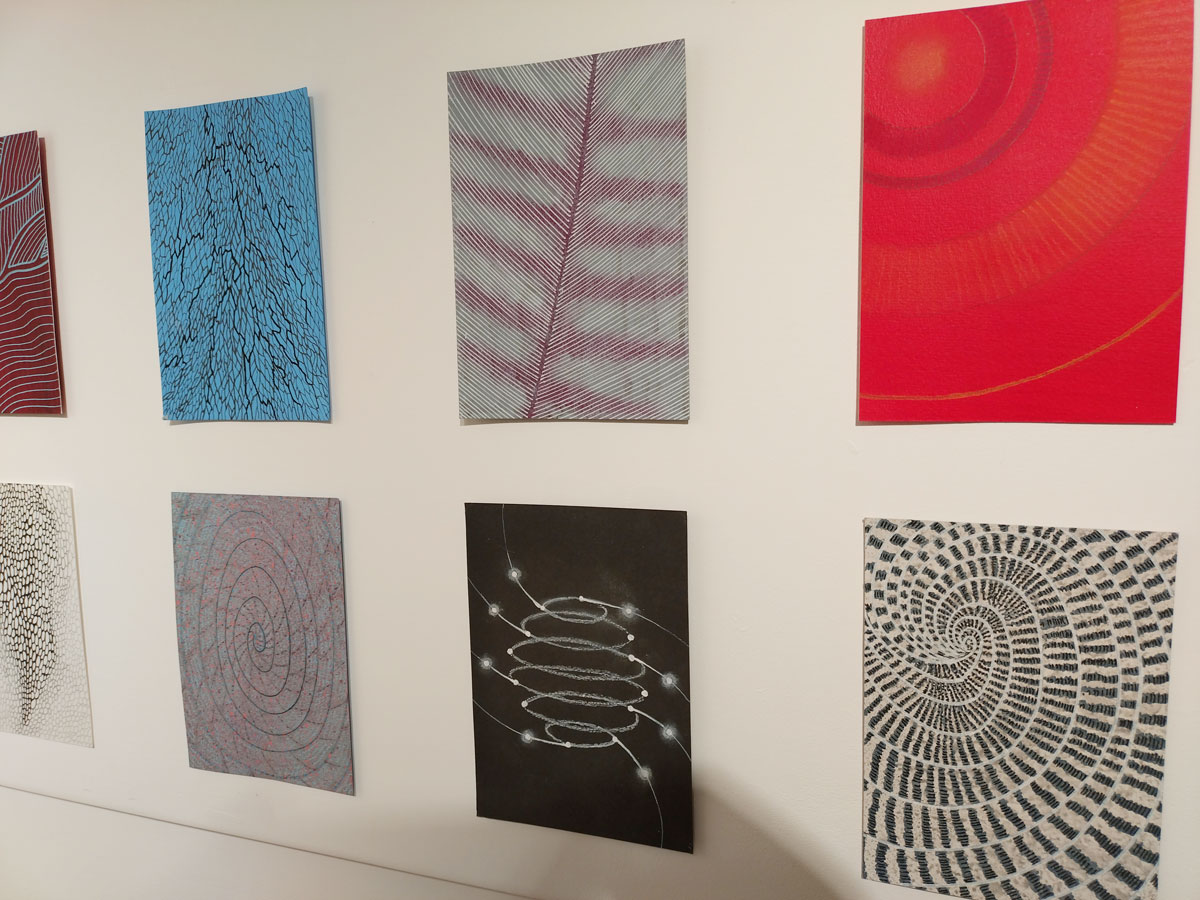
Roger Kite’s Nature’s Tracks is a bright show, almost dazzling as you come in from the November gloom of a late afternoon in East London. Bright, radiant, dancing, shimmering. A show that we’re told was partly a result of the Covid lockdown and a residency in Ireland snatched from the artist four days before he was due to go. It happened to us all in some way or other, shows halted, shows cancelled, shows stopped days after they opened. Then what? In the conversation he had in preparation for an essay about Nature’s Tracks, a conversation with Hugh Stoddart, he referred to the choice he made at that difficult time as a lifesaver. He began to make very small work; he made a large number of these, each about A5 size and he calls them Miniatures. Not only did these small pieces in a way express a sense of confinement and isolation, they served as well to defy that pain: he photographed them and sent them out to friends. He said they functioned like the flags bearing information flown between ships in the days before radio.
“How is Roger informing us? Or rather, what is he telling us in his work? He refers to “natural forms” as his source of inspiration. He begins with observation: of trees, landscape, roots, patterns in water, leaves, even lightning. He thinks of himself, however, as someone making abstract art; he will not be satisfied until the source has been left behind, until, as he puts it, “the work has gone beyond from where it began, and in an unpredictable way.” He is aware that those who look at his paintings will seek resonances and see connections with the world that surrounds us: there are things to be found in it, but we must put the time in! He may spend a long time on each piece, frequently overpainting what he has done. He is required then to react to what remains visible from earlier marks: what will he render invisible and what will be allowed to remain, if only as a ghost of what was there before?”
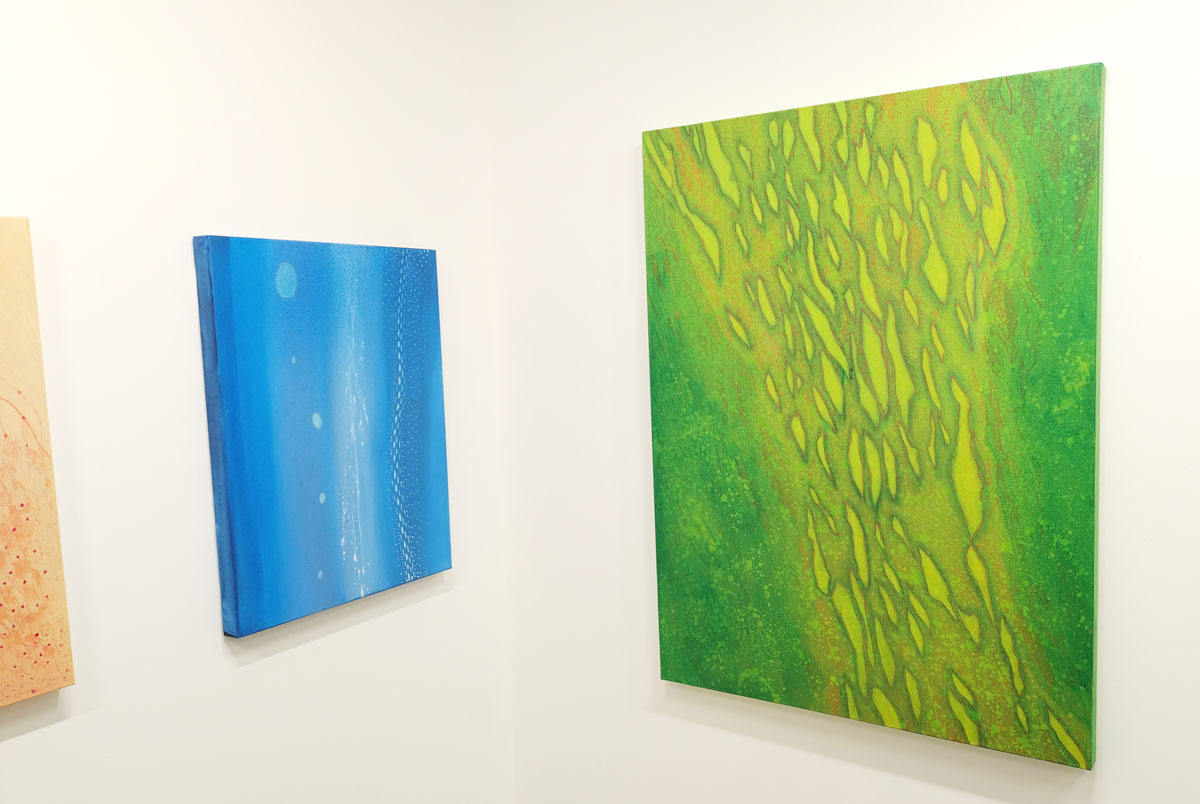
And without reading any of that until after the rather intimate rather bright show had been explored, that had all kind of been gleamed from the bright paintings on the very white gallery walls. That source almost left behind until you really tune in, really look and kind of almost find it without knowing you have. There’s an eye-grabbing lime green piece that’s alive with crucial yellow movement, alive with lightness, radiance, it really is a joyful painting, who knows if it is meant to be? Who’s to say?

.
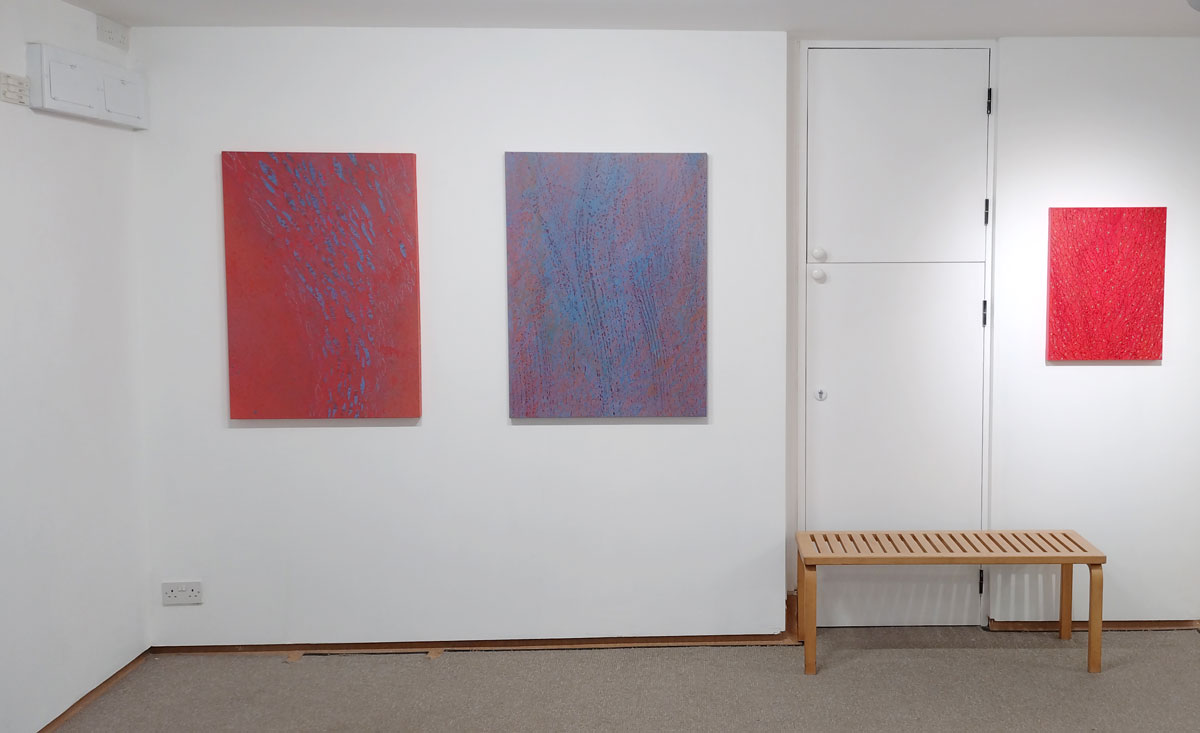
Is there a hint of something psychedelic, almost fractal flavoured? Fractals never really do it for me, but there is something slightly mathematical and at the same time linear. The relationships between the pieces, those conversations. The conversations are interesting, they’re strong, bold, kind of knowing, these are wise paintings, they don’t need to make a lot of noise, they don’t need to demand, they’re just there on the wall warmly inviting you to flow with them. There’s something knowing, something kind of right, kind of born of a lifetime of commitment to making marks, to exploring…
“As we grow older, linear ways of thinking become unwise and egocentricity can seem foolish. Even with the most optimistic prognostication, we know less time remains ahead than the time that has passed and gone. Yet we cling to that linear notion: it fuels our ambitions and gives us a way to measure satisfaction with what we achieve. It is unwise, though, because it can bring sadness as the fact of our impermanence becomes inescapable. Roger confronts this: he rises to the challenge. We humans are not in his paintings except as components of a vast existence, an endless cycle of growth and decay and renewal and change.
He is interested in the natural sciences. He quotes from the Law of Conservation of Energy, which states that energy cannot be created and cannot be destroyed. But it can be diverted, it can be used, it is in us, for a time at least. Most importantly, I find it in Roger Kite’s work. There is an energy captured in it”
There is an energy captured in these pieces, these paintings, Hugh Stoddart, if those are Hugh Stoddart’s words, is right (who am I to say he’s right? He is though). These feel like simple painting, they feel like there isn’t much to them until you really look, until you almost stare at them, until you really open an eye or two., until you trace it. Really should have got to the show earlier… Sorry. (sw)
Benjamin Rhodes Gallery / Roger Kite






 THE ORGAN
Leave a comment