
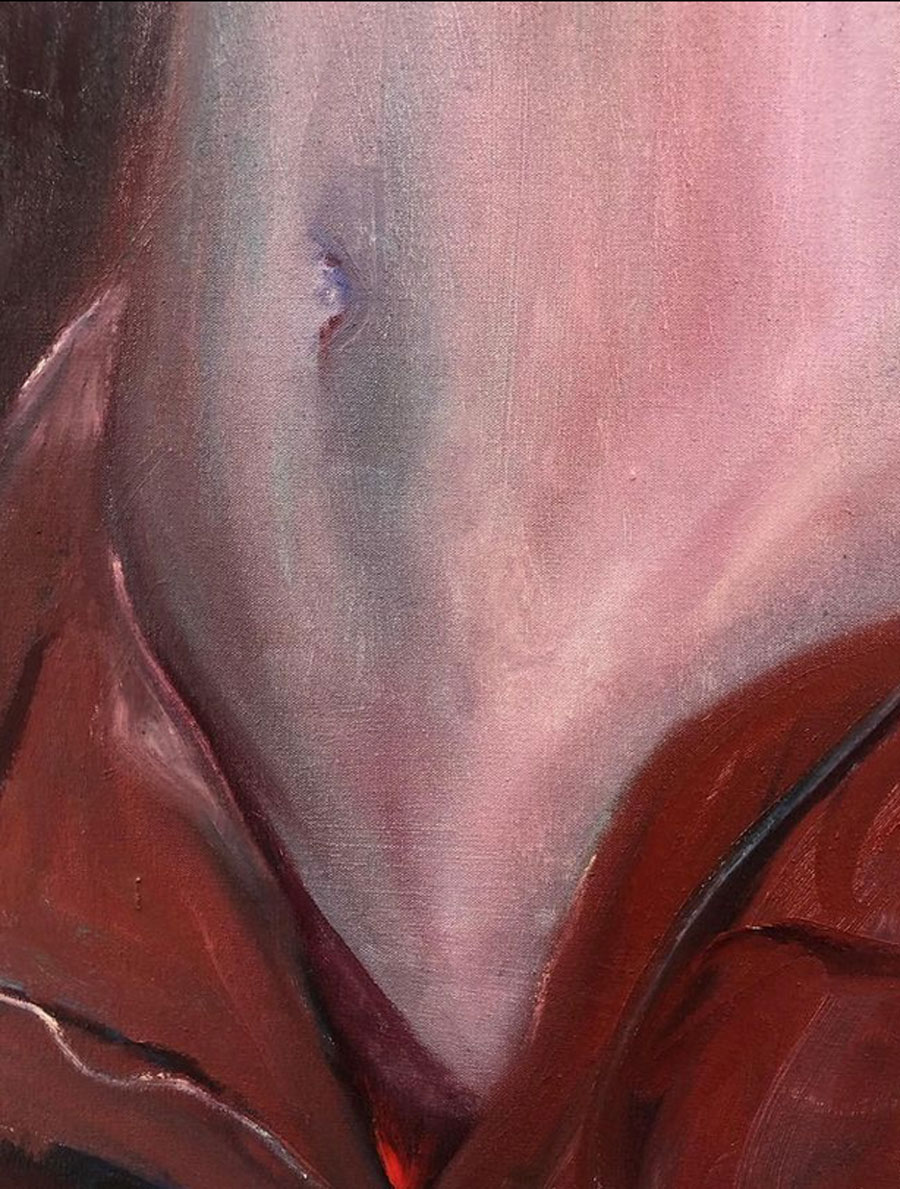

“Our bodies are vessels through which we navigate the world. They are instruments for self expression. There is a reciprocity that exists as our bodies define us and we define our bodies; how we walk them and how they walk us through the world. Each individual’s version of this journey with their body is complex and multi-faceted. The experience is usually a challenge, but can be beautiful too. All bodies are vulnerable to the projections of outside sources of which we must reclaim control. ‘Body Songs’ is a selection of paintings by 5 Royal College of Art artists working with the body and how this reciprocity with it moulds our identity’.”
Body Songs is a five artist group show happening at London’s Fitzrovia Gallery, a show Curated by painter Hattie Malcomson a rather intriguing artist we last encountered at Fred Mann’s new Art Projects back in Summer 2021 – ORGAN THING: The day the world turned dayglo, Hattie Malcomson’s brightness, a painterly statement of intent next to Alex Hudson’s European “traditions” at East London’s New Art Projects…
“Our bodies’ relationships with what is outside of them is another defining element in our lives, be it other people or items from the everyday, such as food or clothes. From beauty to the grotesque and intimacy to exaggerated sexuality, the themes explored through these relationships with the world around us are varied and colourful. Such themes and bodies are painted in varying ways from true to life to the uncanny. Similar messages and intentions tie these artists together, but each one has something different and vital to contribute to the conversation. A lot of these artists physically depict their own body, and although all are self-referential, this is not a collection of self portraits pers
All of these artists are non-male identifying. John Berger famously said: ‘men act and women appear. Men look at women. Women watch themselves being looked at.’ Throughout art history, both viewer and artist have been assumed male. Although these artists do not all identify as women, they do not identify as men, and they are taking ownership of the gaze. Some of these works act as a reclamation of how bodies like ours have been represented throughout history.
The five artists are:
RUBA NADAR – Ruba’s painting currently considers the simultaneous tenderness and eroticism of cropping. They paint distorted sections from their own archive of photographs and attempt to reframe them as film stills or painted collages. Through deliberate cropping and a focus on materials, their subject takes on a disquieting and weird visual language. With the underlying guidance of mid-century Egyptian cinema, their works take a tensely close look at the narrative potential embedded in mannerisms, colour, and garments.
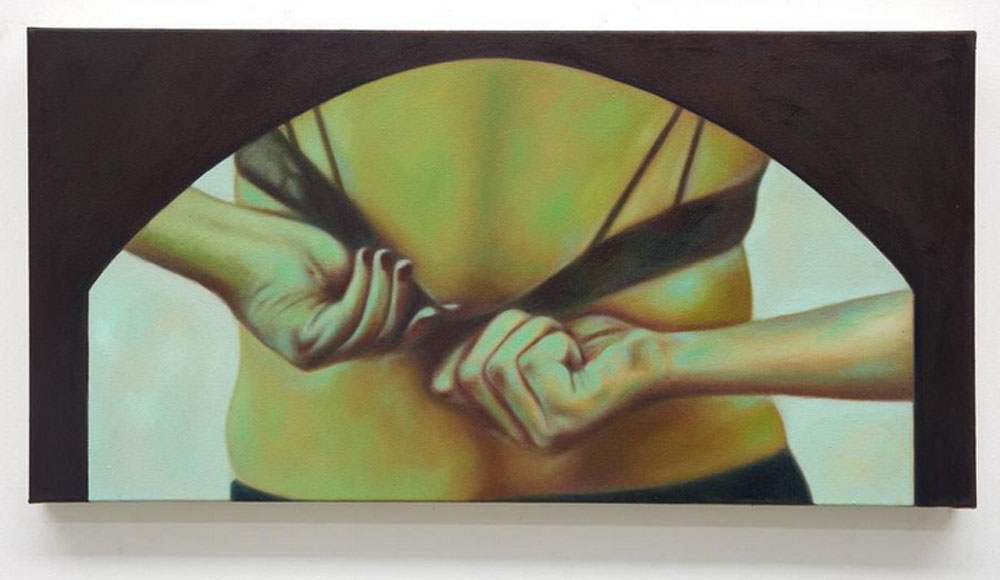
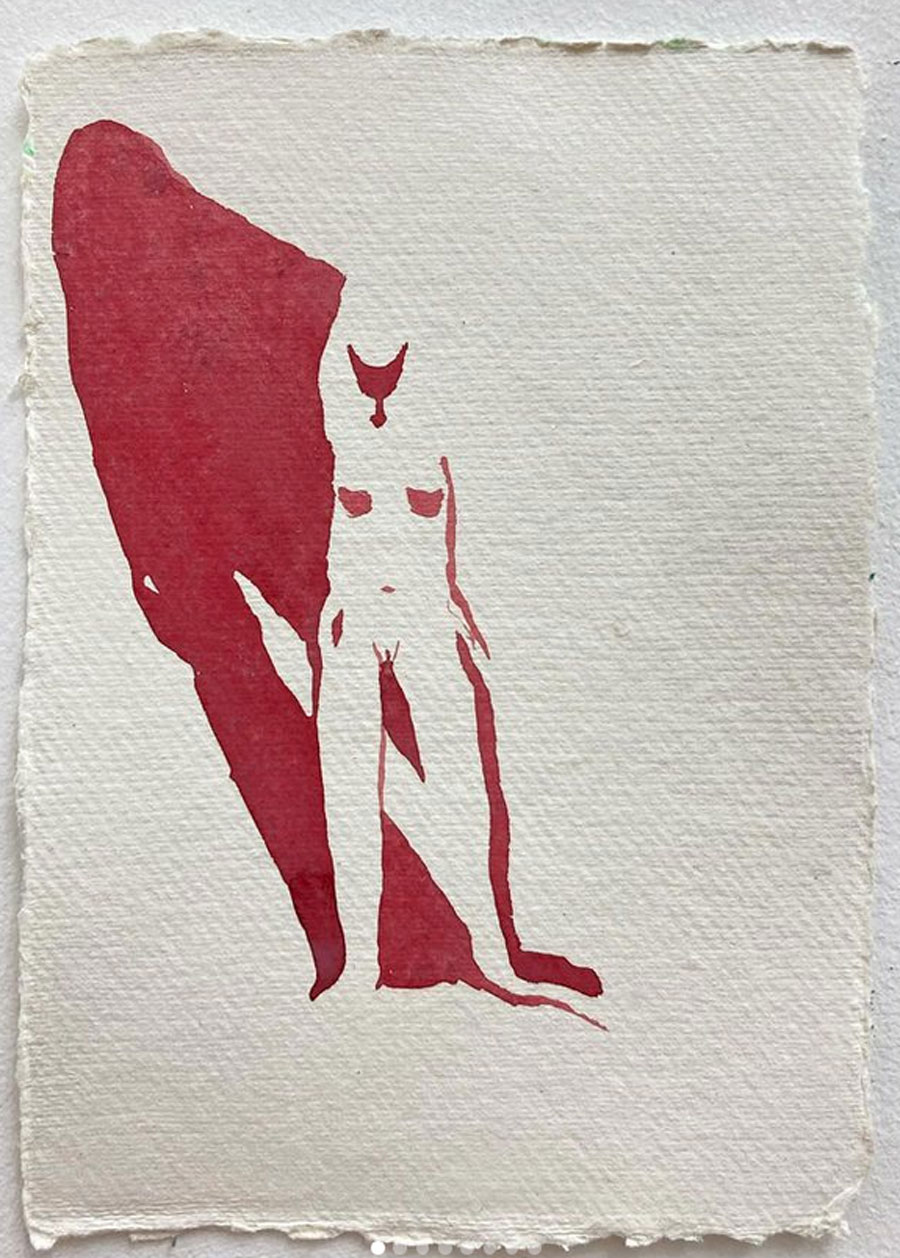
SCARLETT BUDDEN – Scarlett’s work is an individual expression of the female experience. She looks to challenge the tensions between the female inner voice and the historical social dialogues that frame the value and objectification of the female form. These isolated snapshots of the dismantled and edited body stand opposed to the aesthetic whole of the reclining nude. The work searches to address and redefine both the notion of bodily autonomy and the weight of the objective gaze. Arches and keyhole devices are used to create poignant focal points that both reveal and conceal other elements of the body and wider composition. It is these ambiguous facades that allow the observed to also become the observer. Ultimately, the work
focuses on control and the understanding of who in the conversation is truly in possession of it. It is the power dynamic between sitter, artist and audience that is under scrutiny.
RITA FERNANDEZ – Rita’s work revolves mainly around self-portraiture and self-representation through a feminist perspective. This she conveys through questioning concepts around ‘feminine beauty’ and the self. These reflections about beauty standards often explore the representation of distorted bodies in order to discuss the discomfort of ‘non-standardly beautiful’ and the supposedly ‘ugly’. She frequently uses a first-person perspective and extreme angles to further challenge the conventional figure. She finds that the directness delivered using this perspective conveys the necessary rawness for an honest self-portrait and raises relevant questions about identity and spectatorship.
KATHRYN ARMITAGE – Kathryn’s artistic practice explores appetite, specifically through a feminist lens. Manipulating imagery found online, her large-scale, unruly depictions of women eating consider what it means to be a hungry woman with an appetite. Applying paint in an emotionally charged, bodily manner – with thick, gestural marks and vivid, exaggerated tones – she abstracts the subject by distorting and expanding reality. Often utilising heavily cropped compositions, her paintings point to the heavy scrutiny of women within society, and the almost voyeuristic way in which we now scroll and zoom. She invites the viewer to consider the
relationship between female appetite & patriarchal constructs, and the myriad of complex emotions that come with the seemingly simple act of eating.
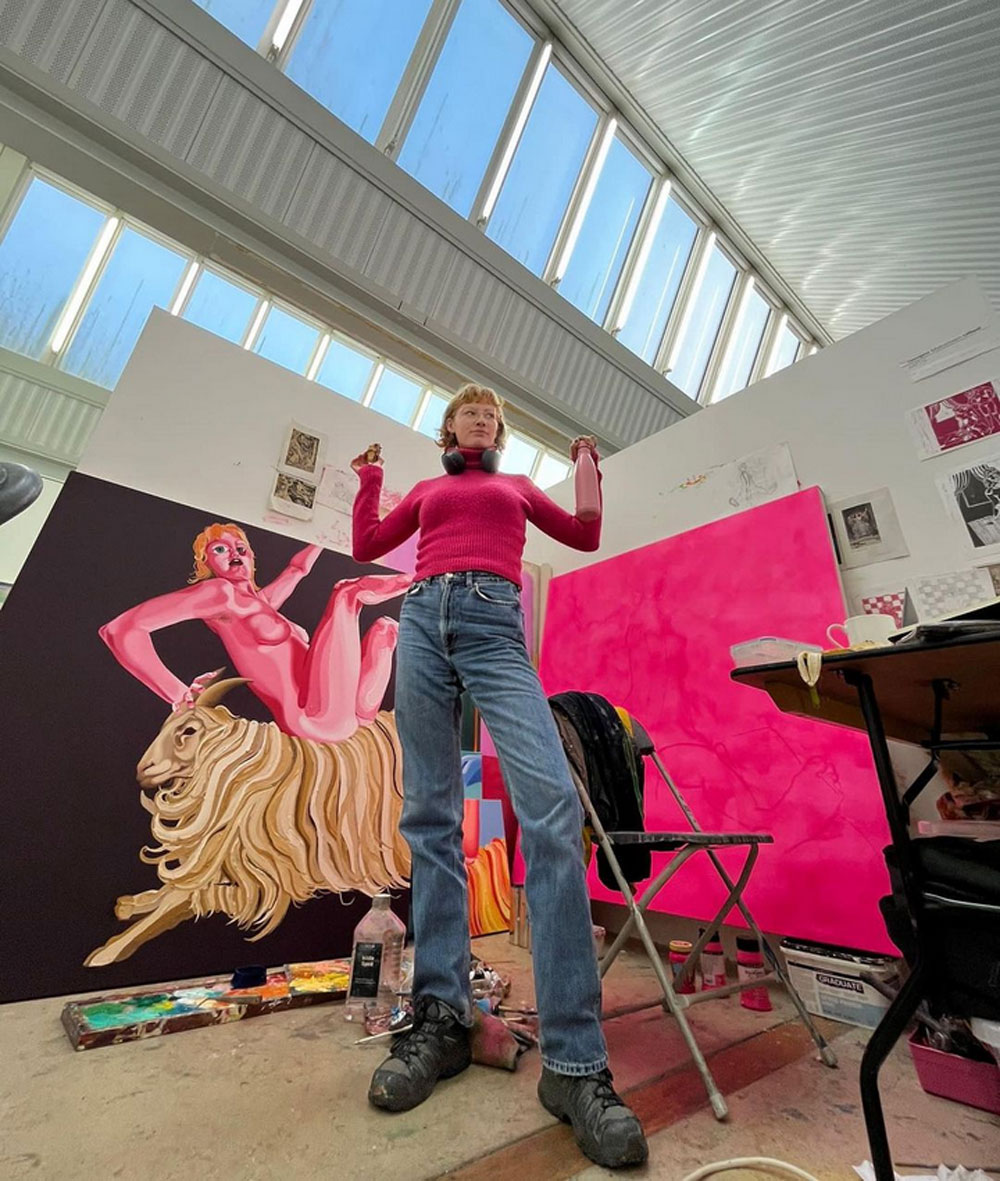
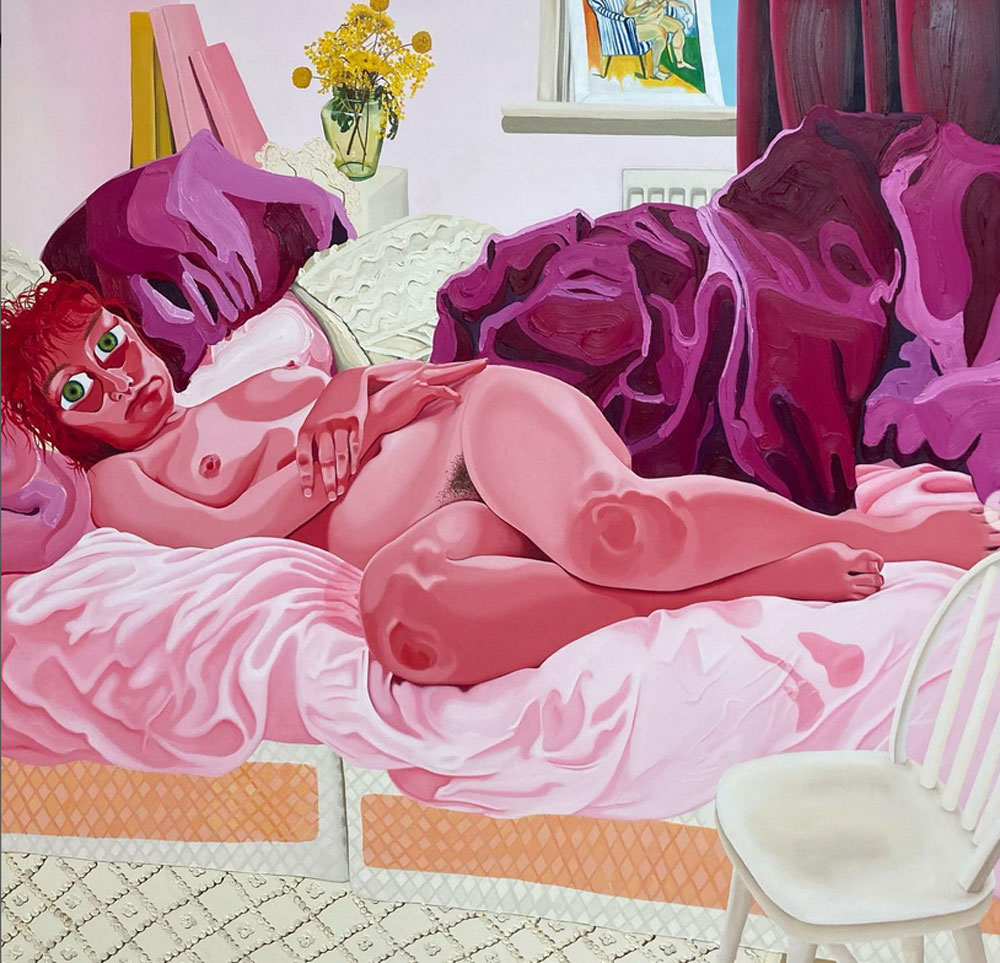
HATTIE MALCOMSON – Hattie’s paintings consist of female characters who act to represent figures, archetypes or ideas from myth. Painted in humorous ways, they exist to mimic and mock the representation of women in western historical stories. These myths are brought into a new context, as the divinity or evil that they have projected onto women in this madonna whore dichotomy are unpacked. She speaks to the present time as she uses her own body to perform these characters, or wear them as a mask. This is to say that the ridiculousness and absurdity of these stories is still influential to our current societal ways of constructing the world, despite our arrogance to think they are tiresome and banal ideas of the past.
There is a so called Private View on 28th February 6-9pm which we assume is open to everyone, the exhibition itself runs 27th February-2nd March
Address: Fitzrovia Gallery, 139, Whitfield Street, London, W1T 5EN



 THE ORGAN