

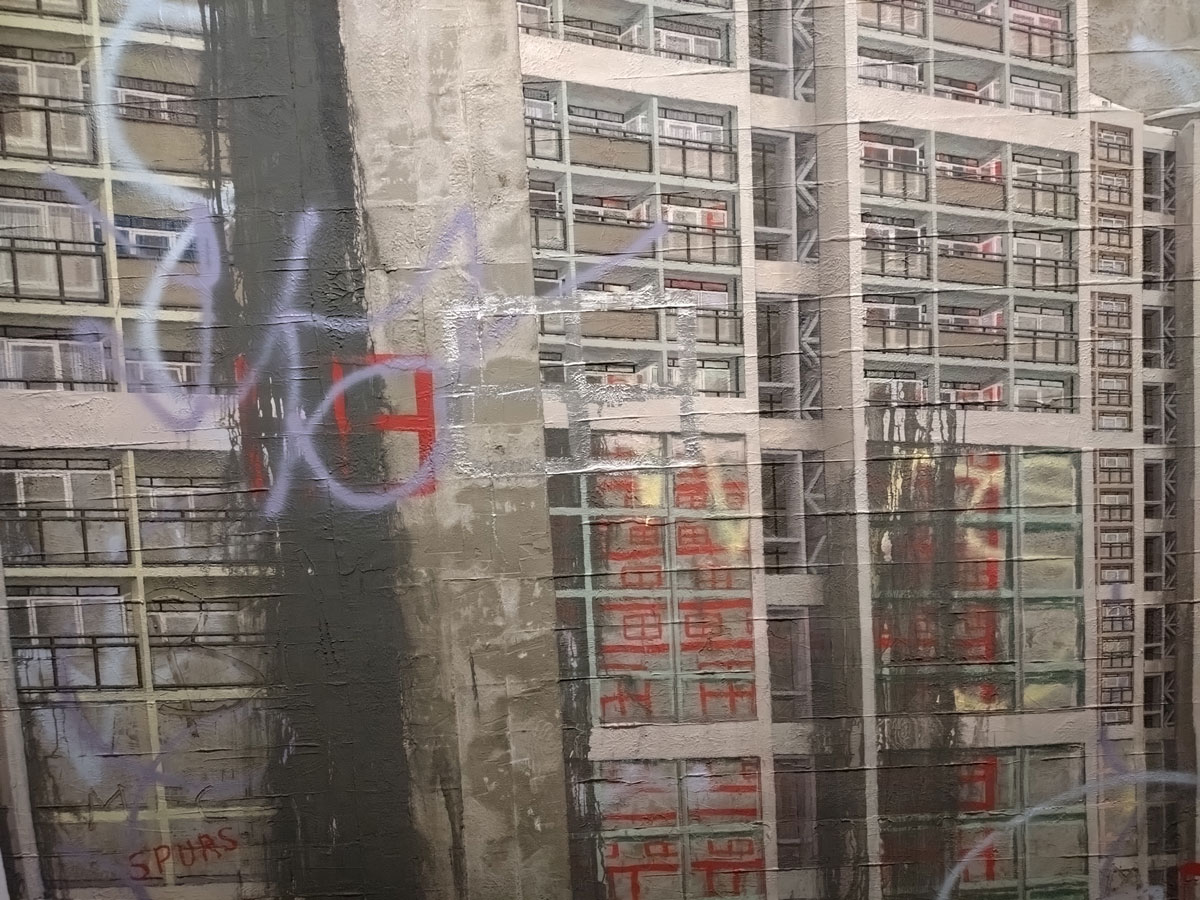
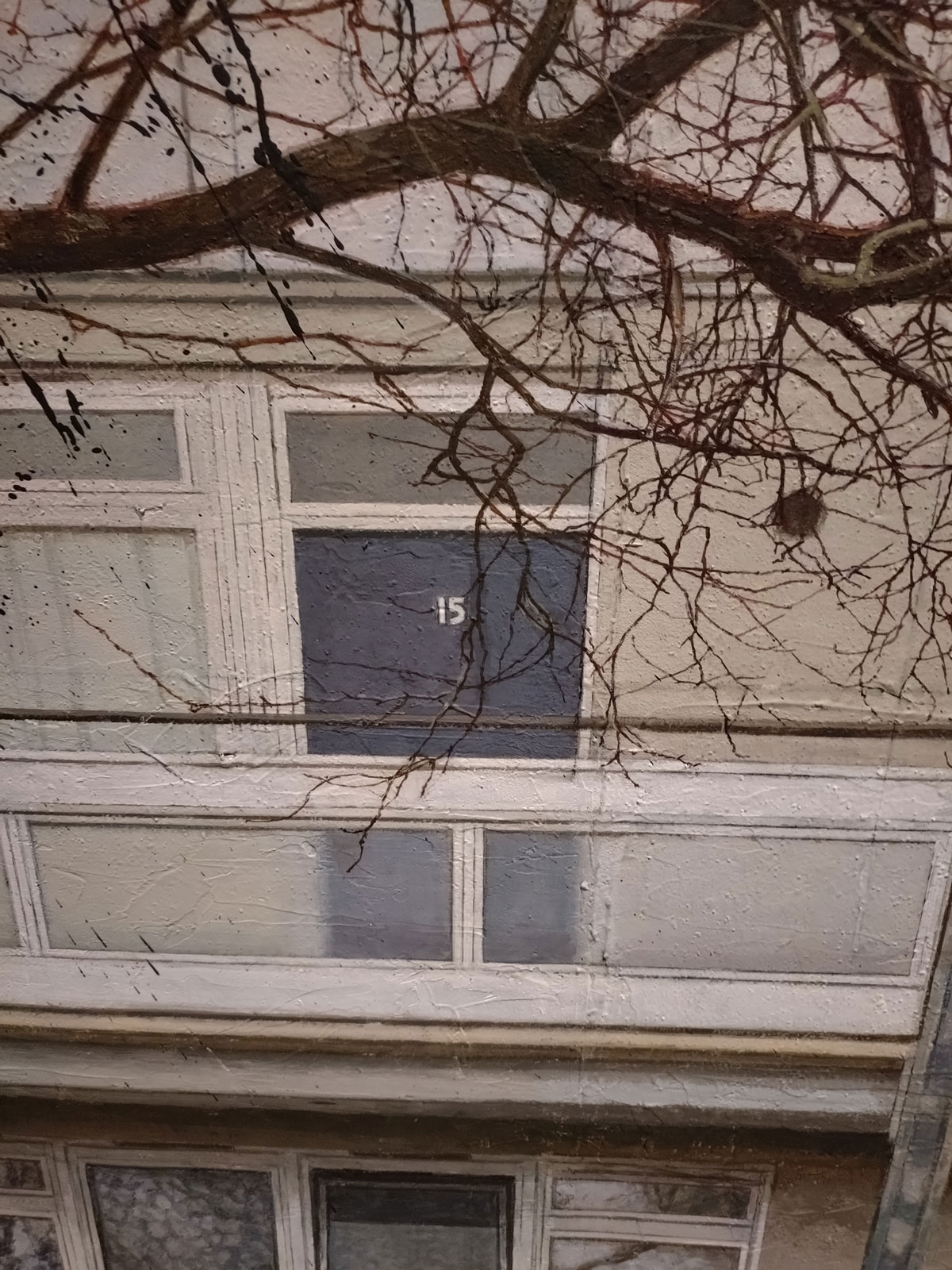
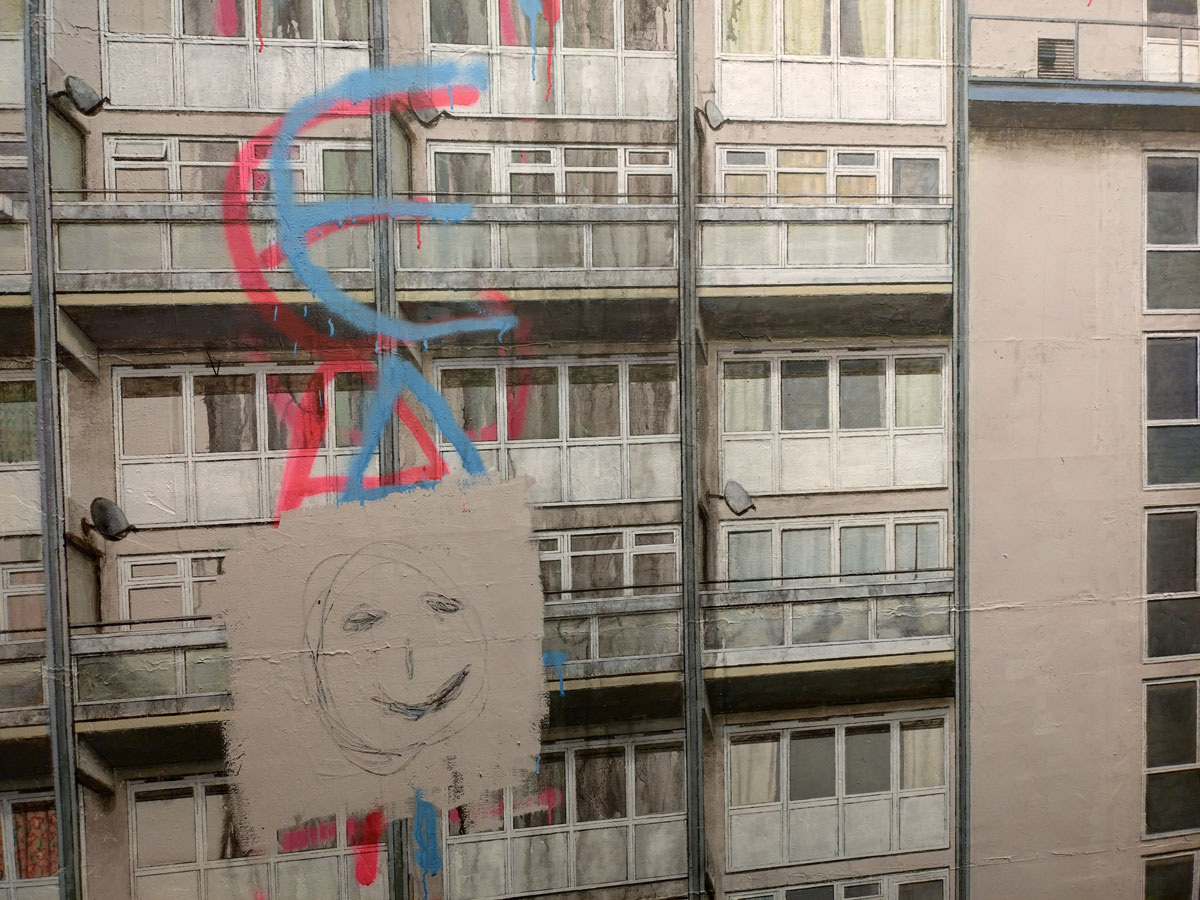
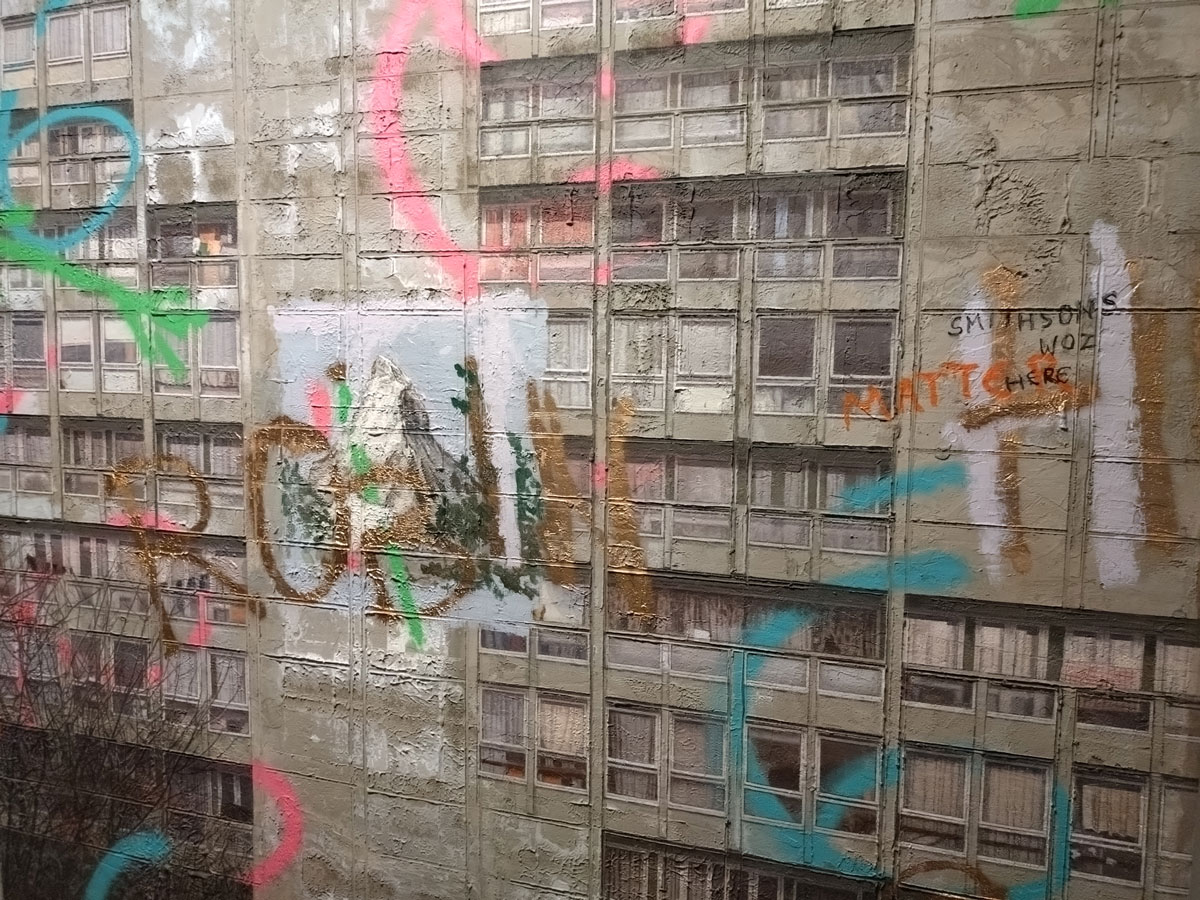
Another week, another Five Art Things thing, We are heading towards Frieze Week now and that is detail of David Hepher piece up there, catch his new show at Flowers over in Cork Street during the Week and the weeks around it, more further down and never mind the bliss or the selfies in front of the art or whatever we said last time. Normal service miles away from being resumed. Five art things, five more art things happening somewhere around right now (or any moment now). Five art shows to check out in the coming days as we repeat ourselves. We do aim to make this an (almost) weekly round up of recommended art events, five shows, exhibitions or things we rather think might be worth checking out. Mostly London things for that is where we currently operate and explore, and like we said last time, these five recommendations come with no claims that they are “the best five” or the “Top Five”, we’re not one of those annoying art websites that ignore most things whilst claiming to be covering everything and proclaiming this or that to be the “top seven things” or the “best things this weekend”. This Five Things thing is simply a regular list of five or so recommended art things happening now or coming up very soon that we think you might find as interesting as we think we will…
And we should add, that entry to these recommended exhibitions and events, unless otherwise stated, is free…

1: a’driane nieves, Black Lilith Rising at Albion Jeune – 13th Oct until 26th Nov 2025, with an opening on 13th October, 6pm until 8.30pm – “Albion Jeune is pleased to present Black Lilith Rising, a solo exhibition of new works by Philadelphia-based artist a’driane nieves (b. 1982, San Antonio, Texas)”.
“Comprising paintings and soft sculpture, nieves uses expressive mark-making and abstract composition to give visible shape to the biological and emotional processes of trauma, adaptation, and transformation – whether inherited, historical, or deeply personal.
Vast expanses of arid desert, deep, narrow canyons, sprawling plateaus, and the towering Rocky Mountains characterise the topography of the Southwestern United States. These landscapes have provided foundational source material for a’driane nieves, who observed them as a child on long interstate car journeys with her father. Travelling throughout Colorado, New Mexico, Arizona, and Nevada, nieves recalls being ‘immersed in an expansive sense of freedom in space’ , a feeling that has informed the large scale of her paintings. Beyond this evocation of space, the colour palette of nieves’ work often echoes the terrains of her childhood. ‘I love the colours in the vegetation and the landscape,’ she says,‘In Sedona, Arizona, where the red rocks are, that palette often shows up in my work.’
The interplay of text and painting is a central facet of nieves’ practice. Literary references, from the writings of African American giants including Audre Lorde and June Jordan, sit alongside nieves’ own texts, an element of her practice she has been nurturing since her teenage years.‘ Just like Cy Twombly brought The Iliad into abstraction, I’m trying to bring James Baldwin’s work into the language,’ says nieves. Writing was a foundational creative outlet for the artist, from the poetry and memoir-based writing of her adolescence to blogging after the birth of her second child. It has been a consistent, cathartic outlet. Her journey with painting, conversely, was more of an ‘accident’, she says, ‘like an intuitive nudge.’ The moment she first put paint to canvas elicited an emotional and physical response. Using her fingers, as opposed to brushes, the embodied act of painting quelled the artist’s feelings of anxiety, the movement of the paint against the surface was ‘grounding.’
nieves’ recently developed soft sculptures mark an important expansion of her practice into three-dimensional form. Using soft, tactile materials – chunky, velvety yarn, polyfill, old paint rags, and pantyhose – she assembles squeezable forms that evoke the corporeal: flesh and skin. These works translate the bodily qualities present in many of her paintings into sculptural space, introducing new elements of tactility, weight, and volume into her practice.
nieves’ work is situated within a lineage of Black women abstract artists whose practices have shaped her thinking about form and scale. While her own visual language may diverge formally from artists like Alma Thomas, she regards her as a foundational foremother, and an early influence whose presence in art history carved space for nieves’ own practice. Similarly, Mary Lovelace O’Neal’s commitment to abstraction during the Black Arts Movement, despite pressure to create overtly political or representational work, has been an important touchstone for nieves. Other figures offer inspiration through both their art practices and personal lives. Bernice Bing and Howardena Pindell, for instance, were both engaged in arts advocacy and social work, roles which nieves herself has assumed. Pindell’s description of “doing my art in the cracks and crevices of my life” resonates with nieves’ own experience navigating chronic illness, caregiving, and activism alongside her creative practice”. Exhibition text written by Alayo Akinkugbe.
Albion Jeune is at 16-17 Little Portland Street, London, W1W 8BP. The gallery in open Monday through to Saturday 10am until 6pm

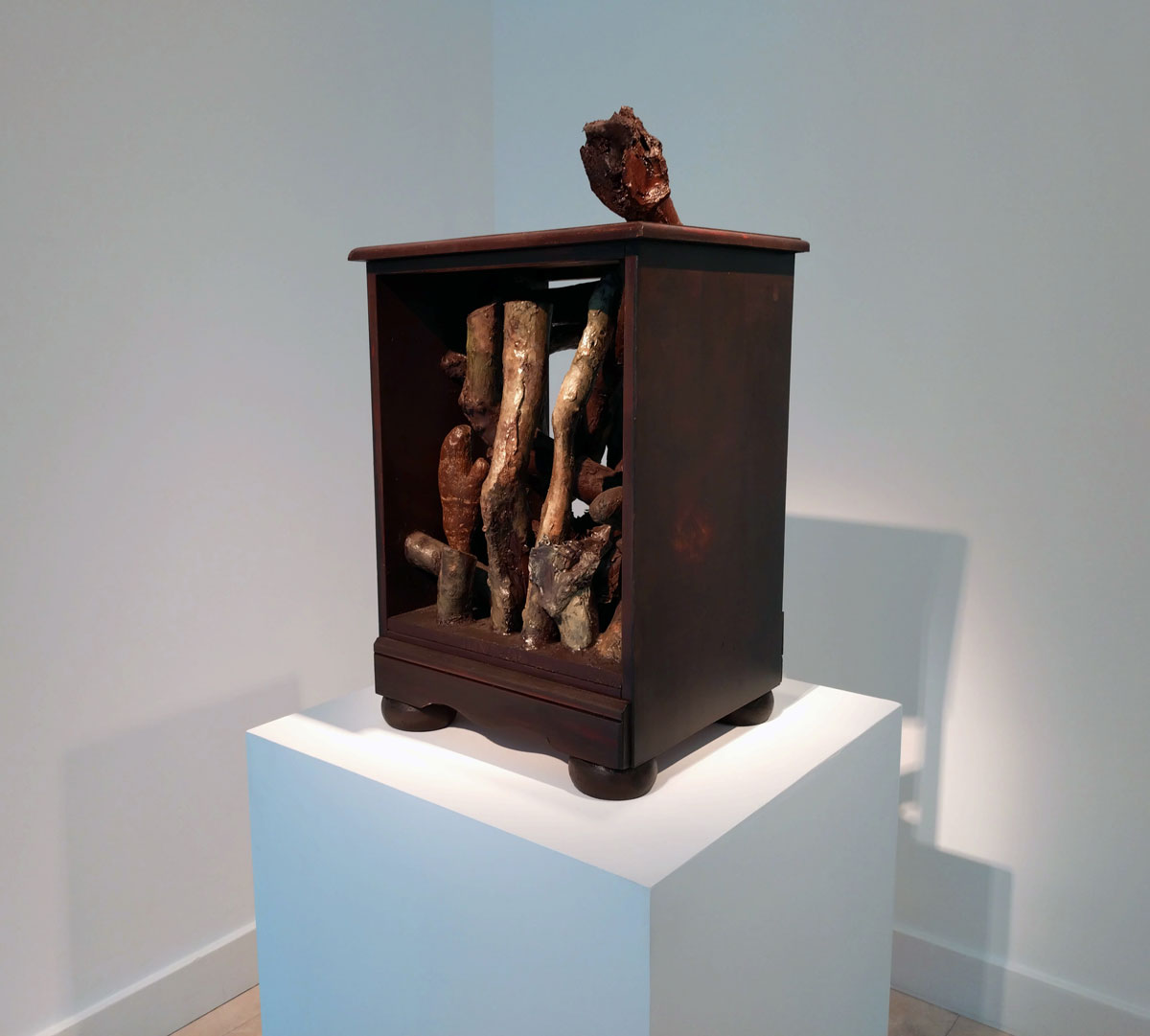
And of course while we’re here, let us highly recommend both Alexandre Diop‘s jsut opened show that we covered on these pages earlier this week – ORGAN: Frieze Week – Alexandre Diop’s debut at Cork Street’s Stephen Friedman Gallery is a show alive with so many exciting layers of… as well as Brandon Ndife‘s also just opened show – ORGAN: Frieze Week – Here we go then, but where is the buzz? Well Brandon Ndife’s, Palimpsests at Holtermann Fine Art is at least a good start…
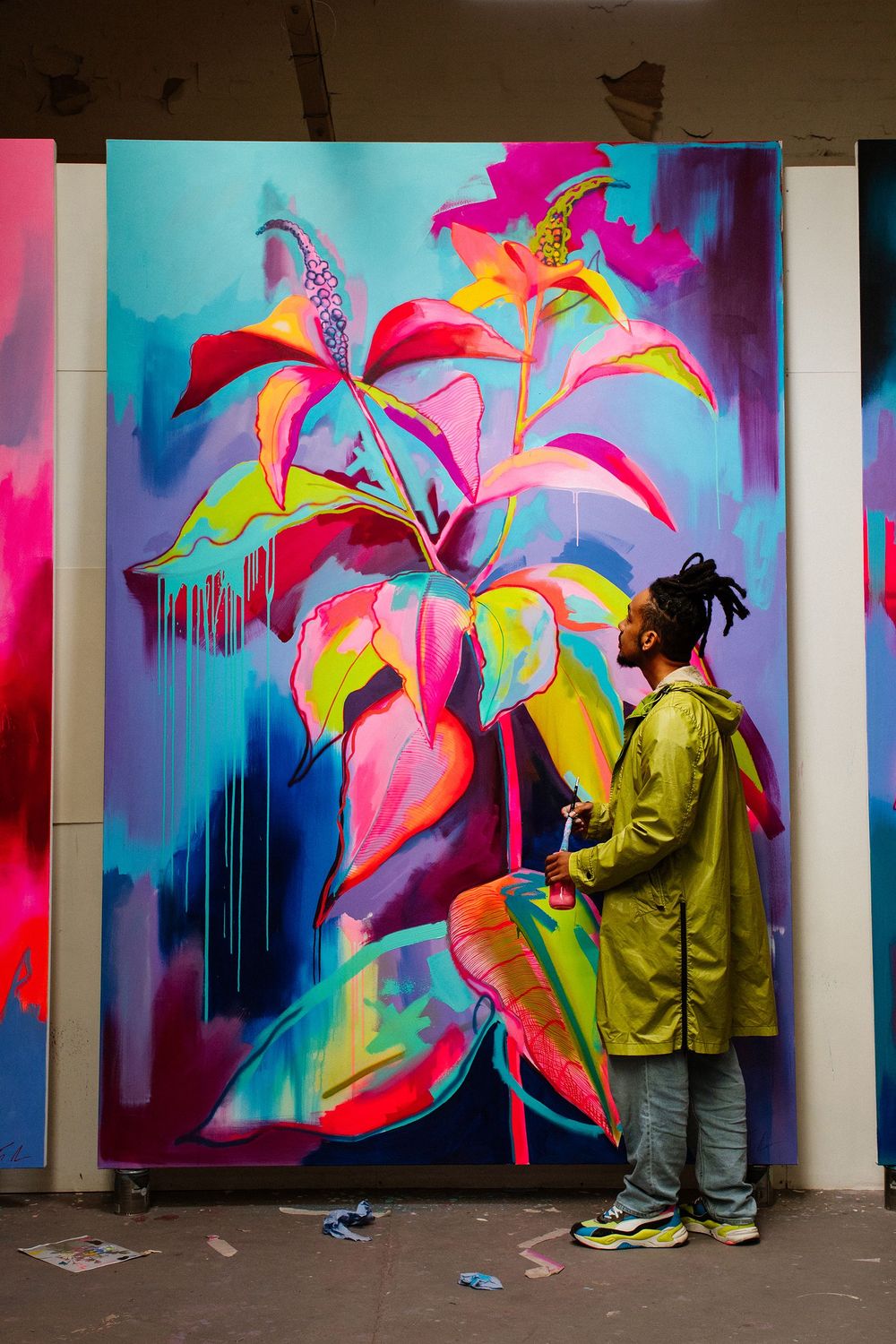
2: Tim Fowler, Place at The Florence Trust – 10th Oct to 26th Oct 2025 – Place Presents New And Recent Large-Scale Paintings By British Artist Tim Fowler. The Show Centres On Location And Placement—How Space, Objects, And Viewers Interact Through Colour, Form, And Composition. The Exhibition Includes Works From His Recent Show The Ground And Looks At Fowler’s Bajan Heritage Through A Botanical Lens. It Features Traditional And Medicinal Plants Used By The People Of Barbados Throughout History, Offering A Botanical Narrative That Connects Memory, Landscape, And Cultural Practice. Place Also Continues Fowler’s Flower Vase Series, Focusing On His Abstract Arrangement Of Flowers. These Pieces Often Dissect Blooms With Rigid Boxes And Lines, Creating A Conversation Between Organic Growth And Geometric Structure. A New Part Of The Show Looks At The Bajan Jockeys Of Pebble’s Beach, Barbados. The Daily Routine Of Young Local Men Leading The Horses To The Sea And Washing Them At Sunrise Anchors The Exhibition In A Sense Of Place And Community Life, Viewed Through Fowler’s Distinctive Palette. Across Place, Fowler’s Ongoing Interests—Colour, Atmosphere, And Balance – Are Clear. His Strong, Recognisable Hues Are Used Thoughtfully To Create Harmony Within Each Painting And Across The Whole Collection. The Result Is A Grounded, Thoughtful Exploration Of Place, Memory, And Colour.
The Florence Trust is found at Little Edward street, London NW1 4BG. There’s an opening on 10th Oct, from 6pm until 8pm and the show runs from 10th Oct until 26th Oct 2025. The space is open Tuesday until Sunday, 11am until 5pm
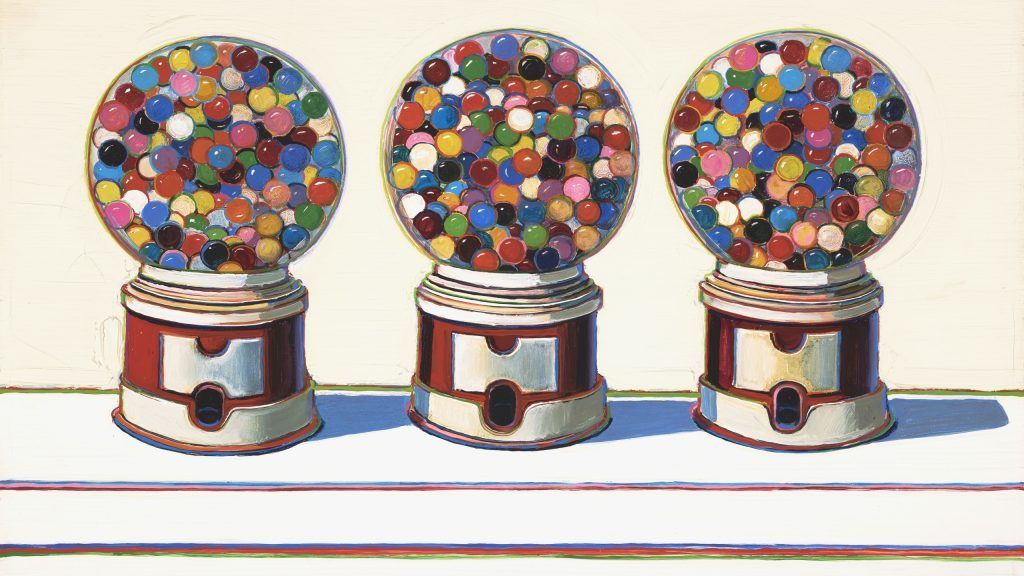
3: Wayne Thiebaud, American Still Life at The Courtauld – 10th Oct until 18th Jan 2026. Now we don’t really make a point of picking the bigger shows in the establishment museum type places for this feature, but this is surely one to see.
Wayne Thiebaud (1920-2021) is now considered to be one of the greatest and most original American artists of the 20th century. Over the course of his long life, working mainly in Sacramento, California, Thiebaud developed a unique style of painting to express his vision of modern American subjects. This exhibition at The Courtauld Gallery will be the first ever museum show of his work in the UK. It will present Thiebaud’s remarkable, vibrant and lushly painted still-lifes of quintessentially post-war American subjects, from diner food and deli counters to gumball dispensers and pinball machines. These are the paintings with which Thiebaud made his name in the USA in the early 1960s.
Thiebaud considered the everyday objects of American life to be a vital subject for contemporary art, and he saw his work as continuing the radical legacy of earlier still-life paintings by Chardin, Manet, Cézanne and others. Thiebaud believed in the importance of commonplace objects that might otherwise be overlooked or considered kitsch. His work turns hot dogs, lemon meringue pies and glossy cream cakes into the stuff of profound modern painting. The exhibition will feature rarely lent works from major museum collections in the USA, including the National Gallery of Art, Washington and the Whitney Museum of American Art, as well as the Wayne Thiebaud Foundation. The exhibition is curated by Dr Karen Serres, Senior Curator of Paintings, and Dr Barnaby Wright, Deputy Head of The Courtauld Gallery and Daniel Katz Curator of 20th-century Art.
The Courtauld is found at Somerset House, Strand, London, WC2R 0RN. The space is open seven days a week, 10am until 6pm. Entry to this show is free but you do have to book a time on line. The exhibition is on from 10th Oct until 18th Jan 2026

4: Billy Crosby, The Meadow at Union Gallery from 15th Oct until 22nd Nov 2025, with an opening on the Saturday afternoon before, 11th October, 4pm until 7pm – “Union Gallery is delighted to present The Meadow, Billy Crosby’s first major solo show in London to date. The exhibition presents a brand-new series of paintings from the artist’s studio in south-east London”. Seems like an age since there’s been anything on at Union, or at least anything enticed us into making the short walk to the space just off the Hackney Road
“The singular work of Billy Crosby intuitively connects the complex relation of painting to current global discourse around the subject of machine learning and its impact on socio-political and personal futures. Crosby guides us into this novel landscape by adopting ‘new tech’ as a natural partner in paint, quieting the hysteria surrounding AI and its potential consequences. Instead, Crosby offers a deeper painterly means to probe these concepts at the dawn of their realisation.
‘The Meadow signifies a gentle, liminal place of emergence; of rest and threshold, wildness and openness. It implies a context of entangled life, diverse intelligences and larger patterns.’ BC
The eponymous meadow can be understood then, as a literal setting as well as an inner or psychic terrain. Both ancient and modern, The Meadow operates on a suspended plane of speculative contemplation. Here we encounter the fruits of Crosby’s lived experience filtered through a recursive dialogue with generative diffusion models, trained on the artist’s previous work.
‘Motifs of biological mimicry and artificial emergence run throughout the work. Forms suggestive of mycelium, neural net structures and symbolic architectures flicker in and out of legibility…’ BC
The formal configuration of his painting often involves the recurring figurehead of a guide-like chaperone, part mystic, part automaton. Though not a central subject, the recurring presence of this talismanic animation leads us through Crosby’s labyrinthine imagery, and hints at sentience within the complex lexicon of his visual language. Collectively, this body of work represents a pertinent commemoration of the current moment as digital advances reshape the eternal record once again. We meet Crosby in this rarefied prairie of interconnected existence, this neutral and neural pasture, to experience afresh the senescence of living and snatch a glimpse of contemporaneity as it stands at the cultural crossroads of today”. Curated by Shane Bradford, 2025
Union Gallery is found at 94 Teesdale Street, London, E2 6PU. The gallery is open midday until 6pm, Thursday to Saturday. from 15th Oct until 22nd Nov 2025, with an opening on the Saturday afternoon before, 11th October, 4pm until 7pm
Previously on these pages…

5: Unveiled Desires: Fetish & The Erotic in Surrealism, 1880 – Today at Richard Saltoun Gallery – 13th Oct 2025 until 28 Feb 2026, in two parts though, two shows. Opening night, Monday, 13th October, 6pm until well, who knows? Look out for the book signing with Anastasiia Fedorova and Anna Sampson moderated by Eva Oh (internationally recognised as Mistress Eva) on 18th October as well (more about the book signing here)
“Richard Saltoun Gallery presents Unveiled Desires: Fetish & The Erotic in Surrealism, 1880–Today, a two-part exhibition curated by Maudji Mendel of RAW (Rediscovering Art by Women), a private collection and curatorial initiative dedicated to the work of overlooked women artists of the 20th century. Opening during Frieze Week, the exhibition forms part of the gallery’s six-month programme dedicated to women artists in Surrealism and traces more than a century of artistic engagements with eroticism by female and queer artists across painting, drawing, photography, and sculpture.
From the first Surrealist experiments in 1924, which situated Surrealism as a site of liberation, subversion, and desire, to their contemporary re-imaginings, the Erotic has always played a central role in the movement. Anchored by Max Klinger’s iconic Paraphrase über den Fund eines Handschuhs (Paraphrase on the Discovery of a Glove), (1880/81), and extending to rarely seen works from the RAW Collection, Unveiled Desires establishes a dialogue between historical precedents and their radical afterlives.
Figures such as Marie Vassilief (1884–1957), Meret Oppenheim (1913–1985), Mimi Parent (1924–2005), and Juliana Seraphim (1934–2005) represent the historical foundations of Surrealism’s erotic imagination. Their work is brought into dialogue with avantgarde feminist pioneers including Jennifer Binnie (1958 – ), Renate Bertlmann (1943–), Helen Chadwick (1953–1996), Felicity Powell (1961 – 2015) and Penny Slinger (1947 – ), who expanded Surrealism’s engagement with eroticism and the body in the second half of the twentieth century. Radical queer perspectives intersperse this chronology, from Pierre Molinier (1900–1976) and Ajamu X (1963–) to Jesse Darling (1981–) and Sin Wai Kin (1991–), whose practices confront desire, identity, and power. Emerging voices such as Anna Sampson (1993–) and Siomha Harrington (1997–) extend these legacies into the present, underscoring the persistence of Surrealism’s erotic imagination as a critical framework.
Across both parts, Unveiled Desires demonstrates how Surrealism’s most transgressive themes — fetish, fantasy, sexuality, and the unconscious — have been continually reinterpreted, exposing the movement’s enduring capacity to question systems of dominance, reframe the body, and recast eroticism as a language of resistance and emancipation.
Part 1: Erotic Surrealism – Fetish, Power, and Subversion
The first chapter delves into Surrealism’s entanglement with fetish, performance, and the politics of desire. The exhibition is anchored by Max Klinger’s Paraphrase über den Fund eines Handschuhs Paraphrase on the Discovery of a Glove), (1880/81), a ten-part print cycle often regarded as a precursor to Surrealism. In this fantastical sequence, sparked by the chance encounter of a lost glove at a skating rink, Klinger transforms a trivial object into the centre of a dream narrative involving theft, shipwreck, and monstrous birds. The work highlights the charged eroticism of fetish objects while exposing the hypocrisies of bourgeois morality and the precarious social position of women in modern Berlin. Regarded as his signature series, the Paraphrase established Klinger as one of the first German artists to entwine sexuality, fantasy, and social critique — anticipating Surrealism’s fascination with the unconscious and the erotic life of objects.
Contemporary artist Siomha Harrington has created the new painting Leather Gloves II in direct response to Klinger’s work, reinterpreting its themes of fetish, desire, and social control through a feminist lens for the twenty-first century. Her work sets the stage for a broader exploration of how Surrealist and post-Surrealist artists have mobilised fetish and the erotic as instruments of critique and liberation: Meret Oppenheim’s provocative objects collapse domestic normalcy into uncanny seduction; Penny Slinger’s 50% Visible Woman (1971) fragments the female form into a psychic and erotic enquiry; and Helen Chadwick’s Meat Abstracts (1989) transform flesh into vivid still-lives — seductive and repellent, evoking desire alongside decay. Queer provocateurs like Pierre Molinier and Ajamu X stage the body as theatre of desire and transgression, while contemporary artists such as Jesse Darling and Sin Wai Kin channel these legacies into new languages of vulnerability, resistance, and play.
A dedicated display of Felicity Powell’s wax works, marking the gallery’s representation of her estate, underscores the sensual tactility and psychological charge of her practice, where fragile, translucent surfaces evoke the body’s intimate connection to memory, desire, and touch.
Artists include: Ajamu X, Denise Bellon, Renate Bertlmann, Jennifer Binnie, Helen Chadwick, Jesse Darling, Siomha Harrington, Max Klinger, Béla Kolářová, Alice Maher, Rose Mihman, Pierre Molinier, Meret Oppenheim, Felicity Powell, Marta Rocher, Anna Sampson, Penny Slinger, Sin Wai Kin, Marie Vassilief, Cossette Zeno, Seigle, and others.
Part 2: Erotic Surrealism – Identity, Desire, and the BodY
The second instalment turns to Surrealism’s psychic landscapes, foregrounding how eroticism reveals the unconscious and shapes identity. This chapter considers eroticism as a portal into the psyche: bodies become symbols of desire and repression; dreamscapes expose the irrational; and eroticism itself emerges as a force that resists control. The result is a constellation of works where the erotic is both deeply personal and radically political.
Artists include: Eileen Agar, Denise Bellon, Mimi Benoit Parent, Mary Beth Edelson, Ruth Francken, Aligne Gagnaire, Jane Graverol, Rose Mihman, Bona de Mandiargues, DaddyBears, Anna Sampson, Juliana Seraphim, Elsa Schiaparelli, Ebun Sodipo, Suzanne Van Damme, and others.
Richard Saltoun Gallery is found at 41 Dover Street, London, W1S 4NS. The Gallery is open Tuesday through to Saturday, 10am to 6pm (11am until 5pm on Saturdays).
Last time we were at Richard Saltoun Gallery it was on a wet Friday afternoon for that excellent Christine Binnie show – On a wet Friday in London part one, Jennifer Binnie at Richard Saltoun Gallery, Lilly Fenichel’s Against the Grain at Gazelli Art House…
The last time we encountered DaddyBears it was over at Gallery 46 – ORGAN THING: A packed opening for Working Girls at East London’s Gallery 46, there’s a lot to explore here, a lot of questions thrown out…
And yes, we are going to have six this time for there is a David Hepher opening that you need to take note of
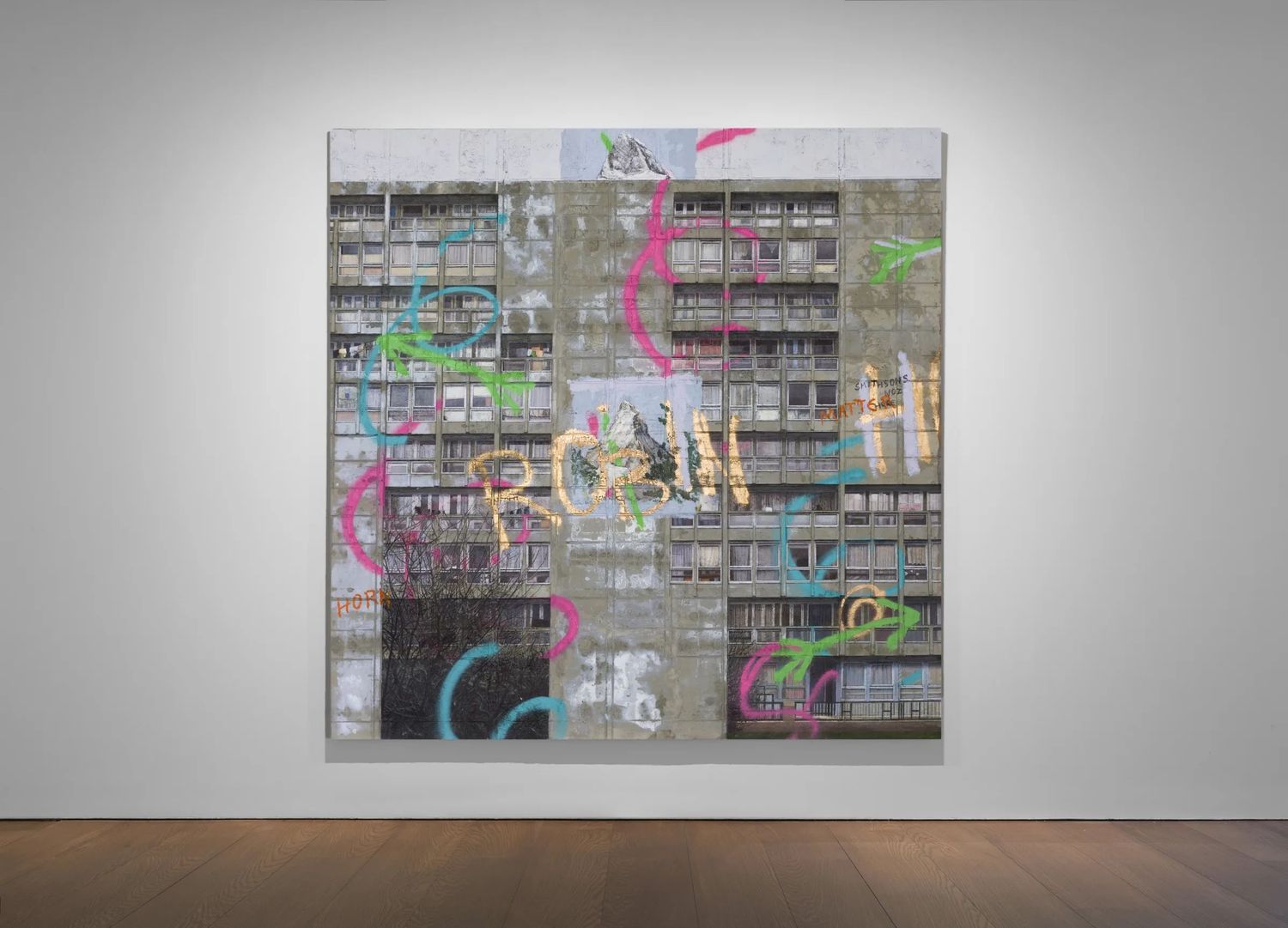
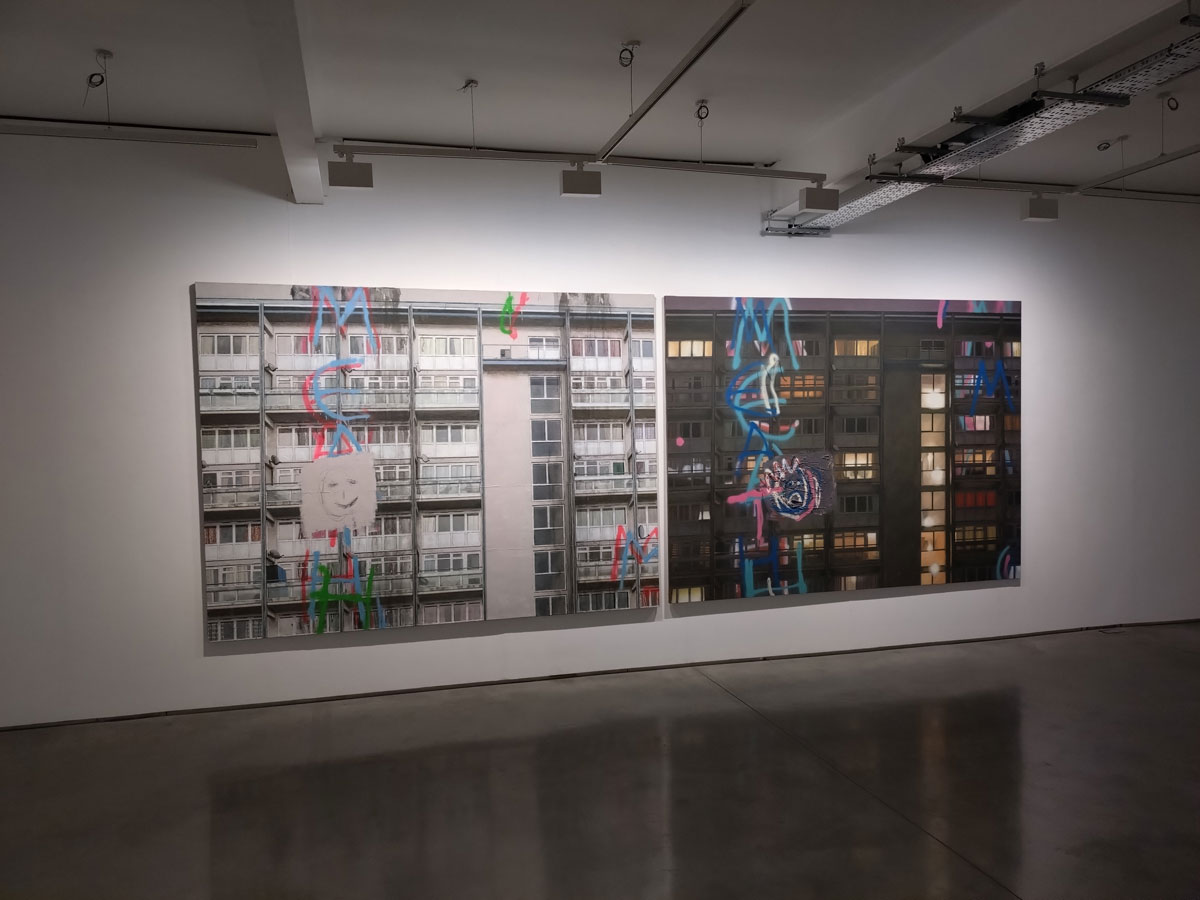
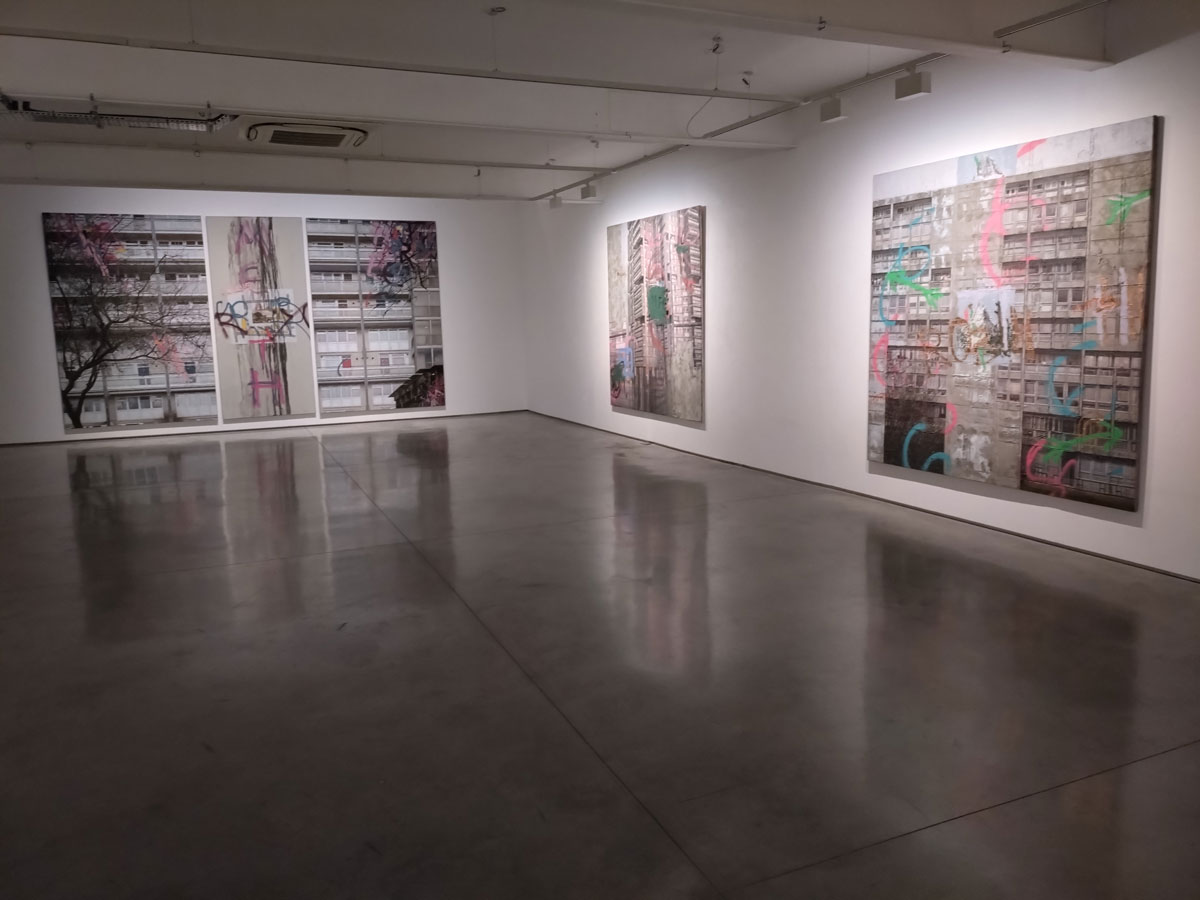
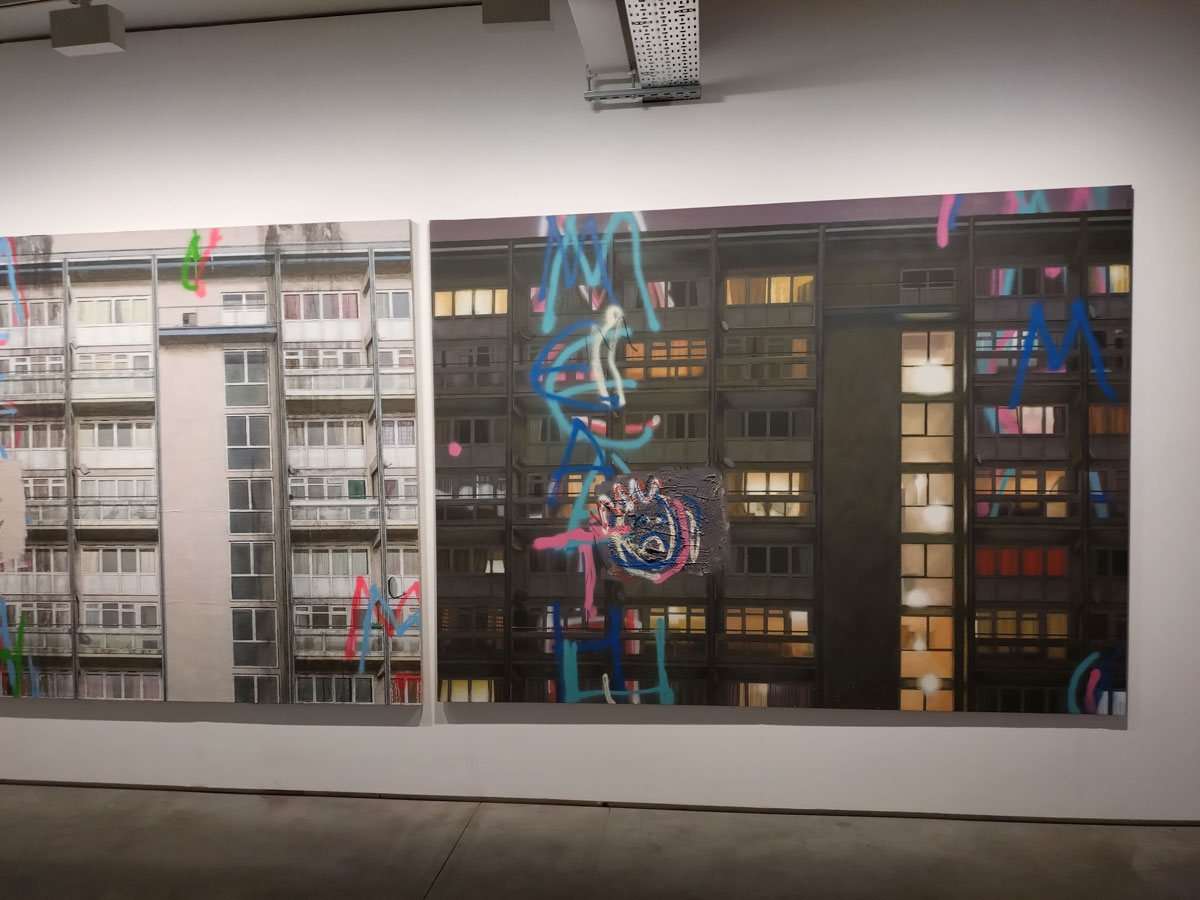
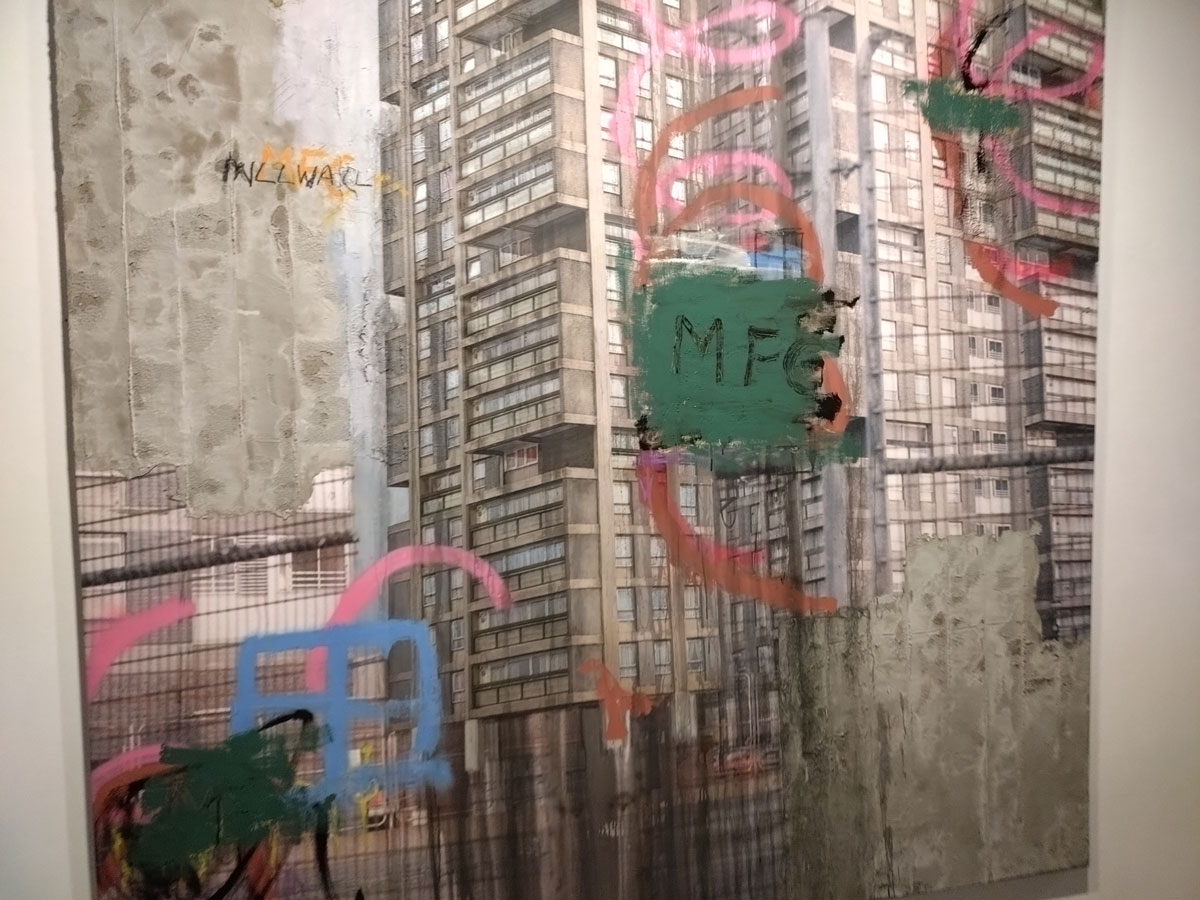
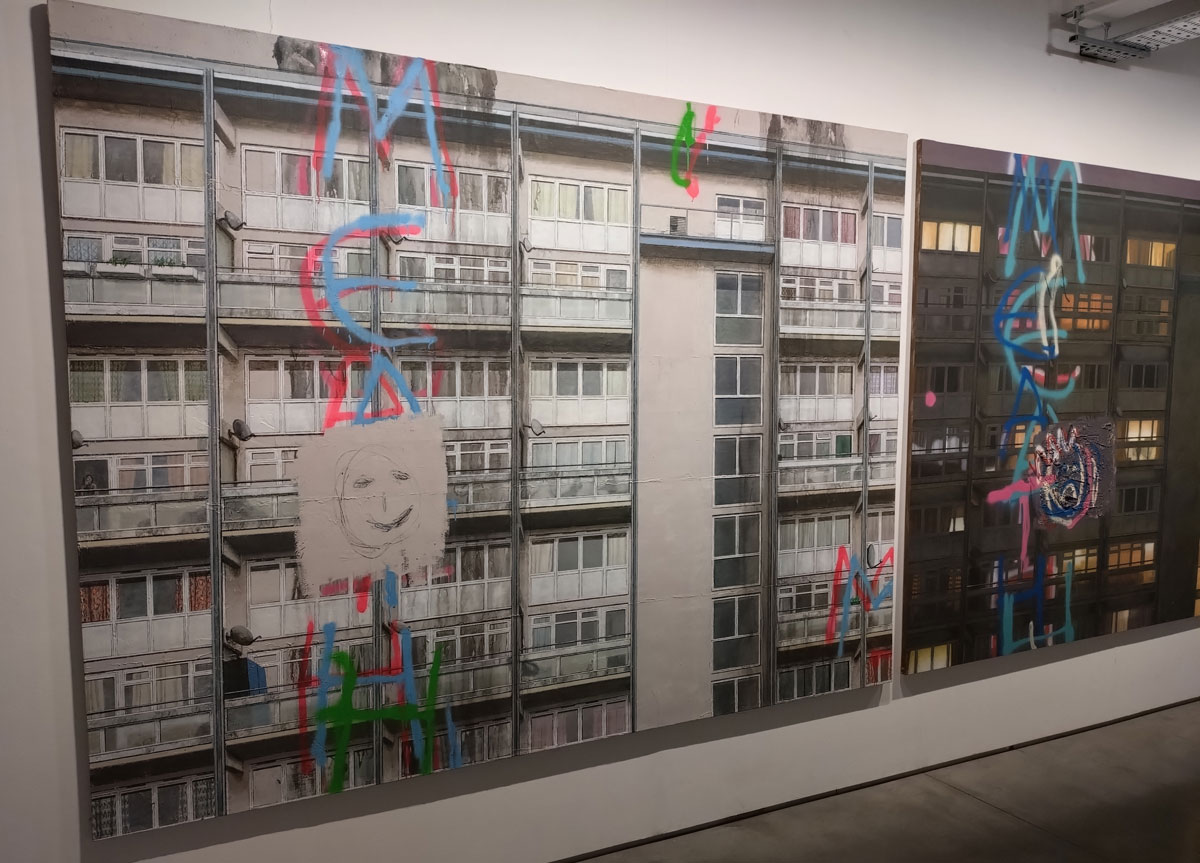
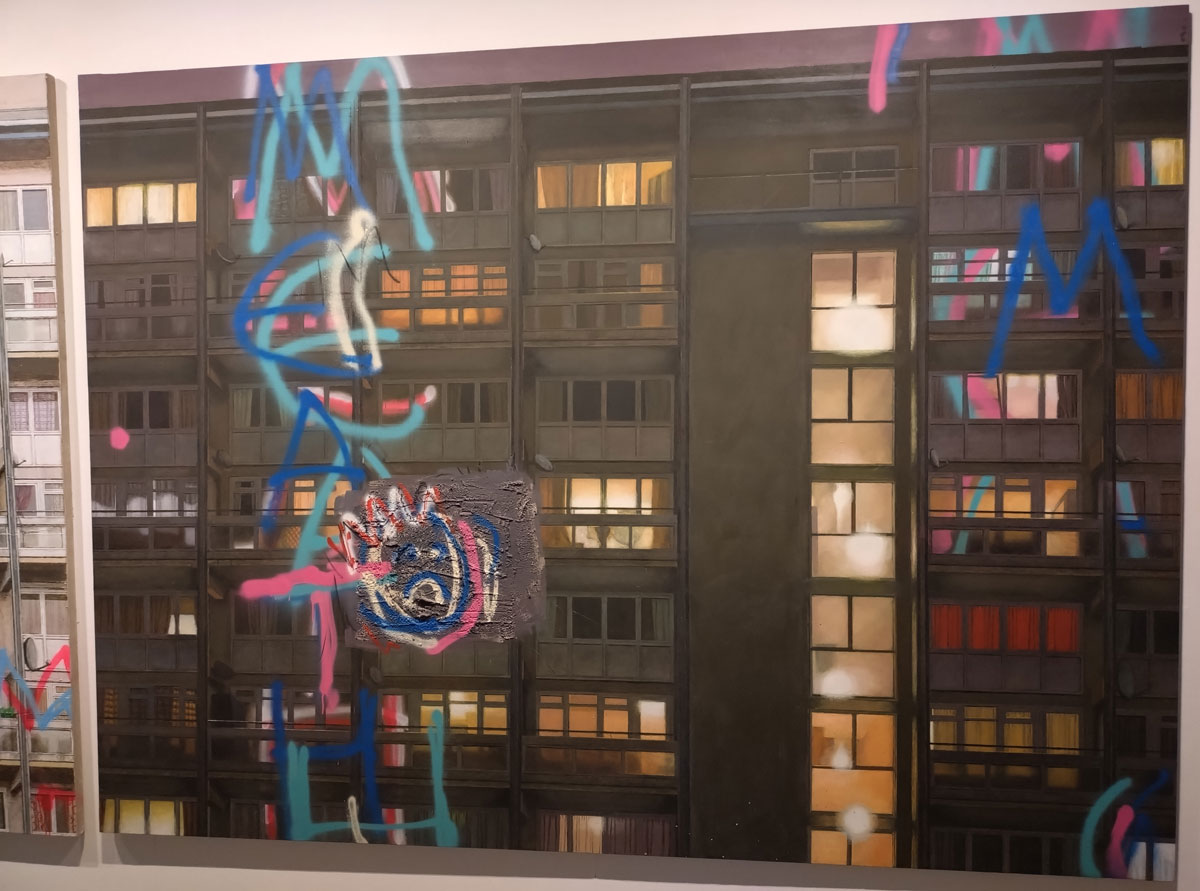
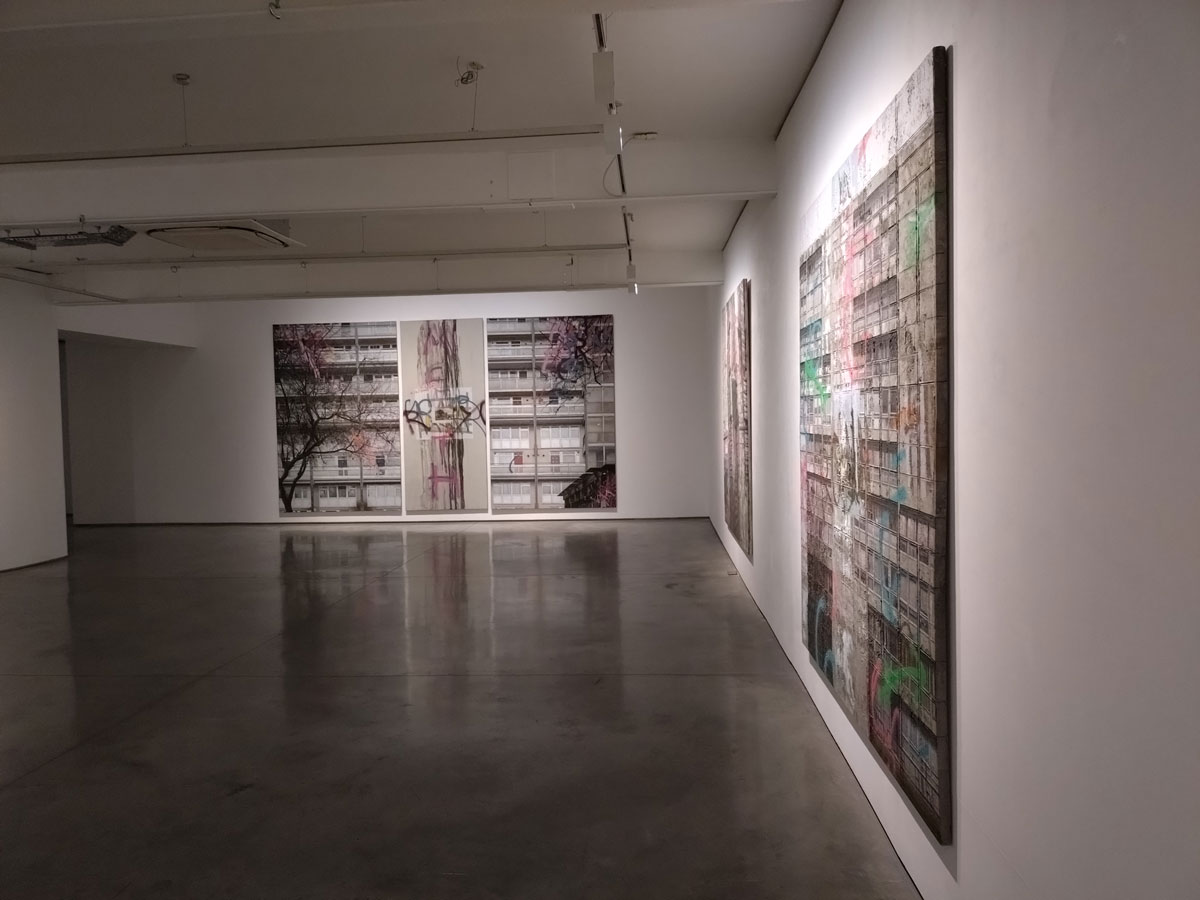
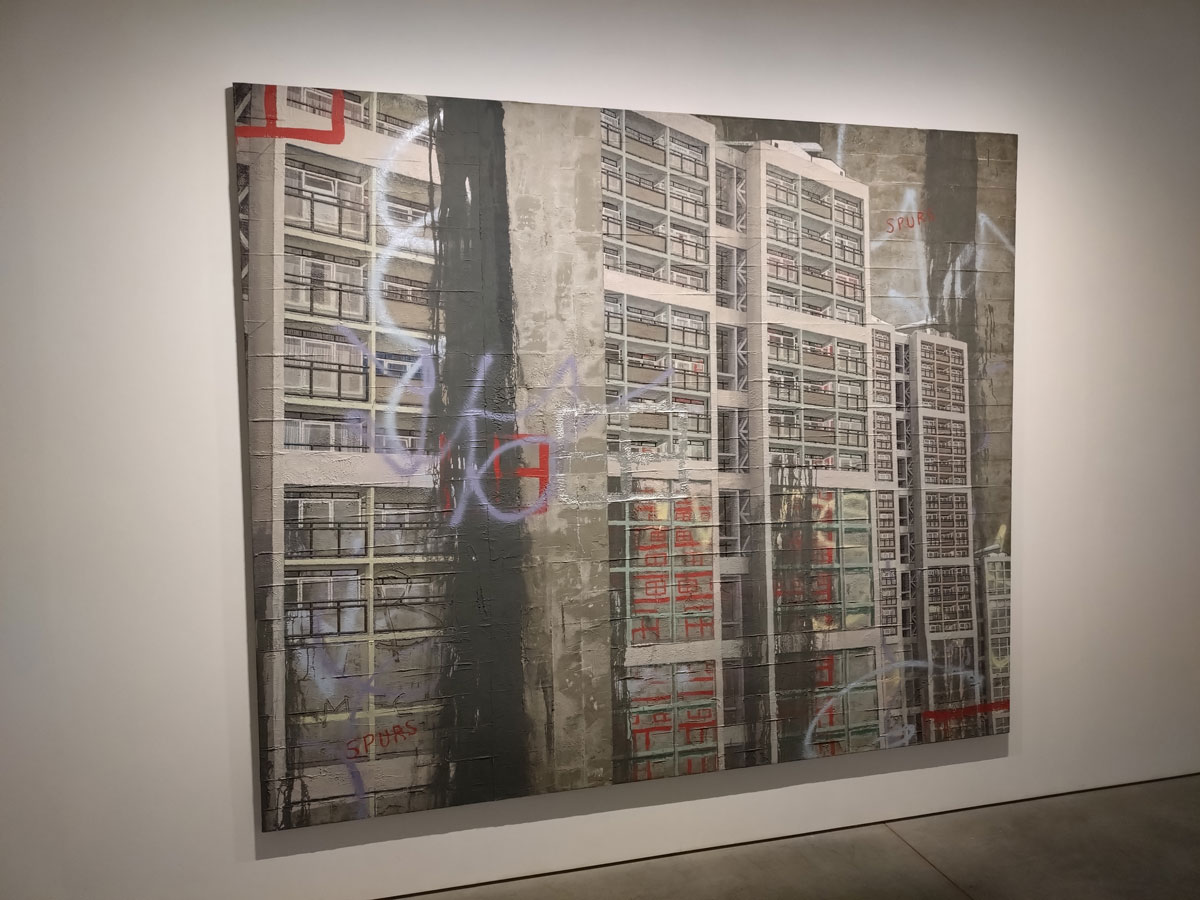
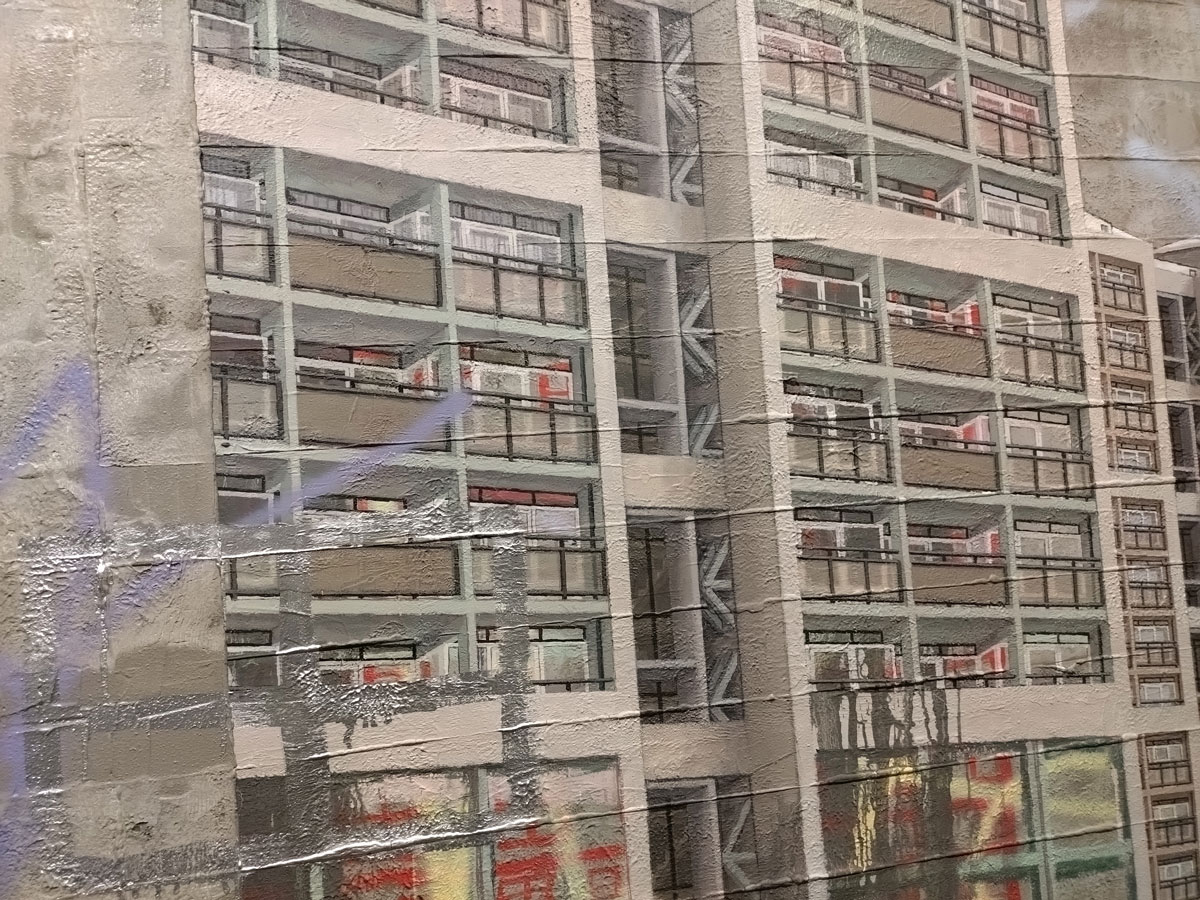
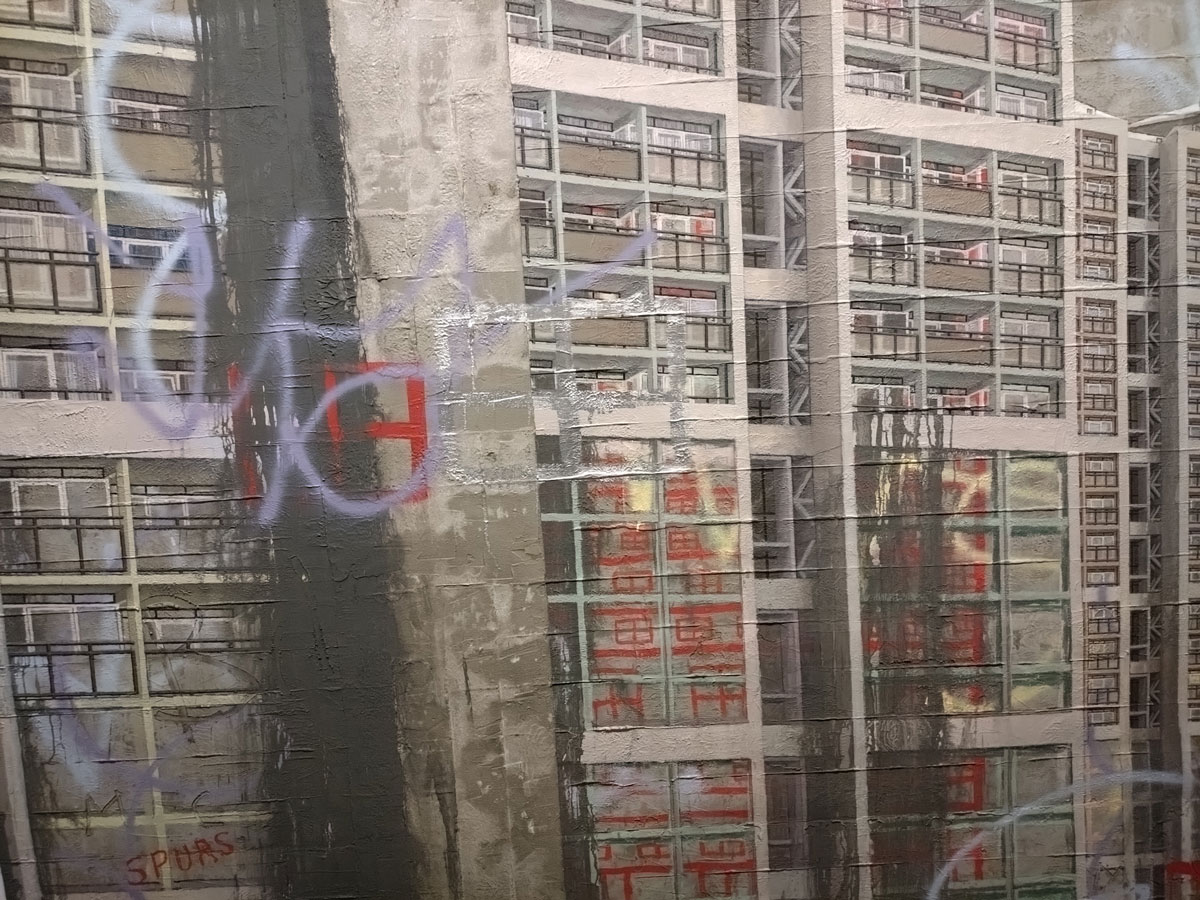
6: David Hepher, The Elegy of Robin Hood Gardens at Flowers Cork Street – 15th October until 15th November 2025 – yes, a sixth and these things are in no particualr order but this is one we’re really looking forward to – “Flowers Gallery is delighted to announce The Elegy of Robin Hood Gardens, a solo exhibition by acclaimed British artist David Hepher (b. 1935). Now in his 91st year with much of his practice dedicated to a sustained examination of London’s tower blocks, Brutalist architecture, and urban housing estates, in this exhibition Hepher surveys the Robin Hood Gardens in Poplar, East London. On his renowned large scale, and often working on concrete-primed surfaces layered with graffiti motifs, splatters of paint, and pictographic symbols and imagery, Hepher reflects on the legacy of this landmark estate”.
Flowers Cork Street is found at 21 Cork Street, London, W1S 3LZ. The Gallery is open Monday to Saturday, 10am until 6pm. The exhibition is on from 15th October until 15th November 2025.
Previously
Shots from David Hepher’s previous show…
 THE ORGAN
One response to “ORGAN: Five Recommended Art Shows – a’driane nieves at Albion Jeune, Tim Fowler at The Florence Trust, Wayne Thiebaud at The Courtauld, Unveiled Desires: Fetish & The Erotic in Surrealism at Richard Saltoun Gallery, David Hepher at Flowers Cork Street and…”
[…] with last Sunday’s Frieze East End Day yet and that’s before we start looking at that excellent David Hepher opening at Flowers over in Cork Street (alongside a number of other openings) that happened back on Tuesday […]