


Tenant of Culture, Ladder at Soft Opening, East London – This show has pulled us back a number of times now, a busy opening night back in mid September, it goes on until October 21st so you still have time.
A new body of work from the strangely named artist known as Tenant of Culture that examines the perceived dichotomy between destruction and decoration, interrogating how the aesthetic of waste has, for centuries, been appropriated within the fashion industry. These new wall-based and suspended works highlight the dissonance between the creation of physical waste and the aestheticization of damage
This space, just off the Hackney Road on the borders of Bethnal Green, currently home to the curation of the rather low key Soft Openings gallery, has always been a great place to view art whoever has occupied it. There is an immediate wow upon walking in to Ladder, that tiny skip of a heartbeat that comes with that first encounter with an exciting show and before you get into the whys and wherefores, this is a visually exciting show before you get anywhere near the meaning of it all. This is a show that pulls you in and demands you unravel her unravelling, a show you want to go with. Textile based shows have always been good things when they dare to be as bold as this…
.
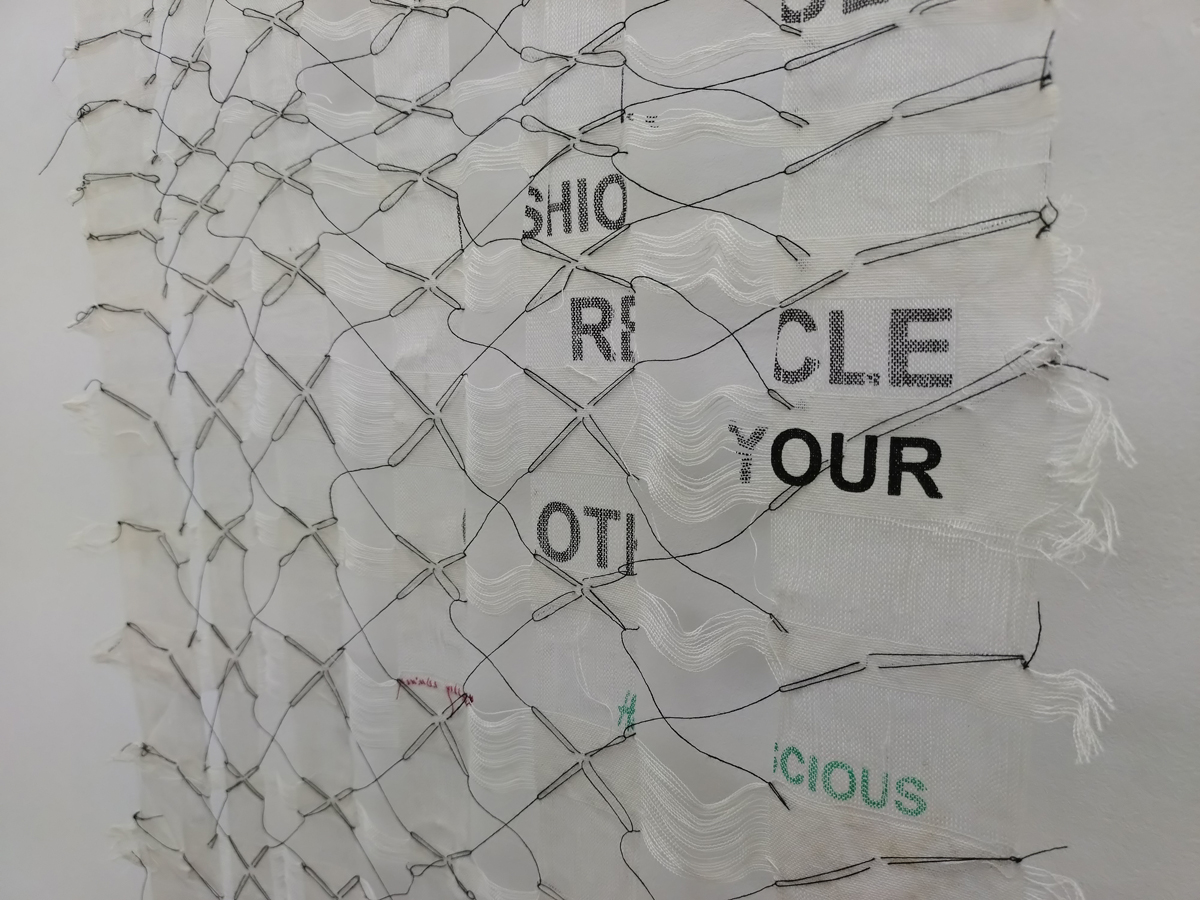
In the exhibition, the artist expands her approach to undoing material, utilising traditional craft techniques based on the extraction or destruction of threads and fibres. These processes include devoré, open work embroidery and slicing as well as deconstructive methods developed through material experimentation to reference the practice in the garment industry of intentionally creating rips or slashes in previously undamaged clothing and accessories. The artificially ripped pair of jeans may be the most well-known contemporary example, but for centuries textile workers slashed garments as both a political act of resistance and a mechanism of control.
The cultural significance of the destruction of clothing is grounded in several notable moments in fashion’s industrial and stylistic history. The “cutters” movement of the mid 18th century utilised slashing as an act of protest, while the Spitalfields silk weavers engaged in campaigns of destroying each other’s work in a battle to stabilise wages. During the European Renaissance, the decorative technique of cutting slits in the outer layer of a garment to expose the fabric underneath was inspired by the distressed clothing of soldiers returning from battle, serving to visually distinguish political allegiances and social hierarchies. Today, the common approach of luxury brands is to slice unsold luxury goods to prevent value deflation; an economic strategy to create exclusivity through scarcity. Tenant of Culture explores this inheritance, disassembling and rebuilding manufactured garments to look at the politically charged treatment of textiles, examining the ways in which ideological frameworks with wide social implications materialise in methods of production, circulation and marketing of apparel.
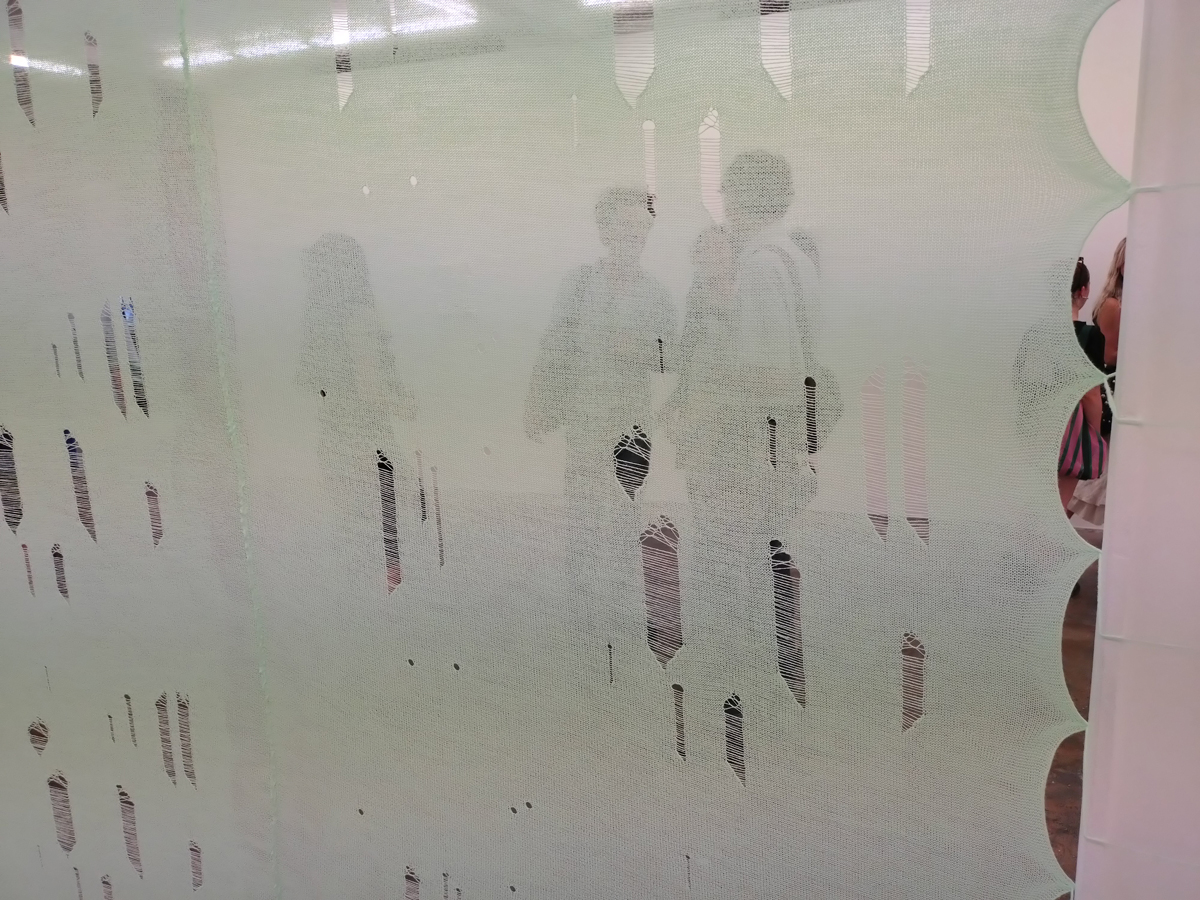
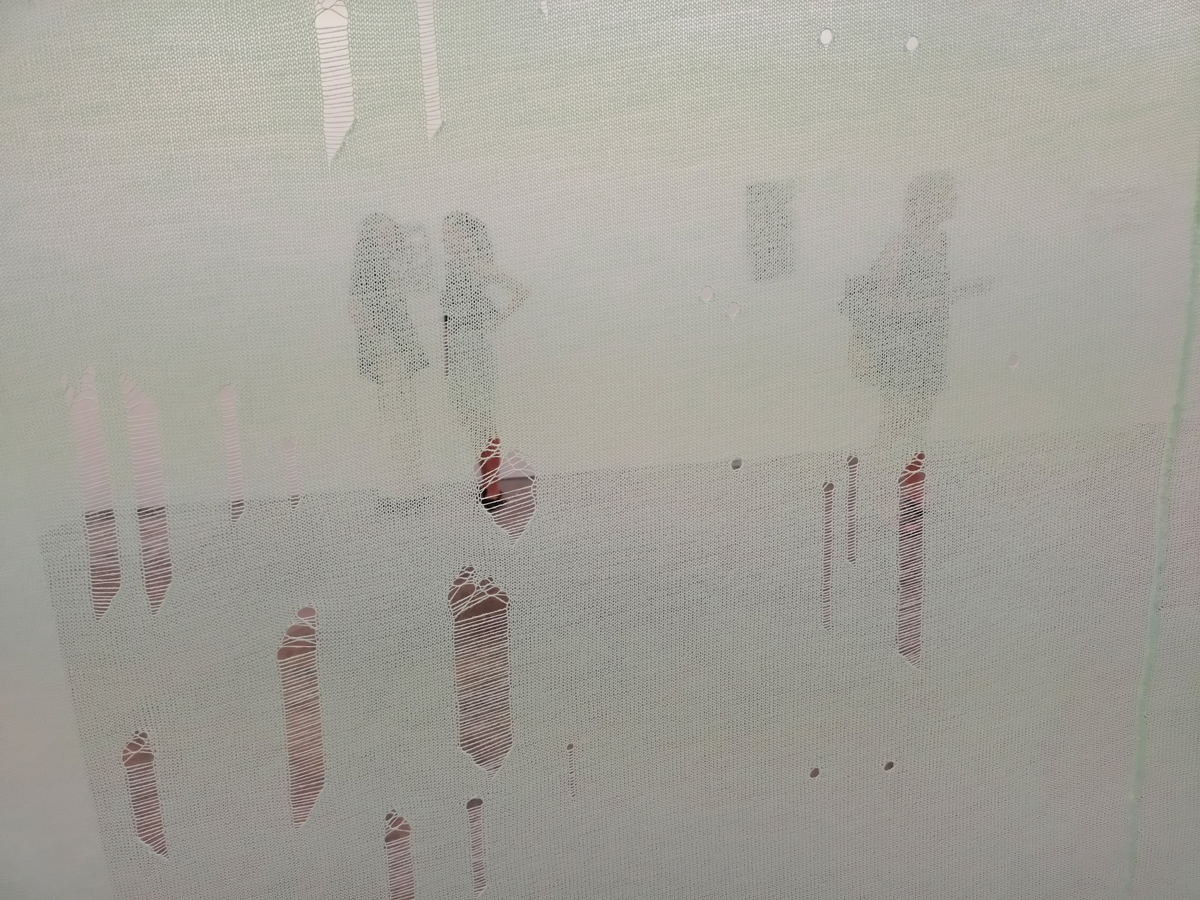
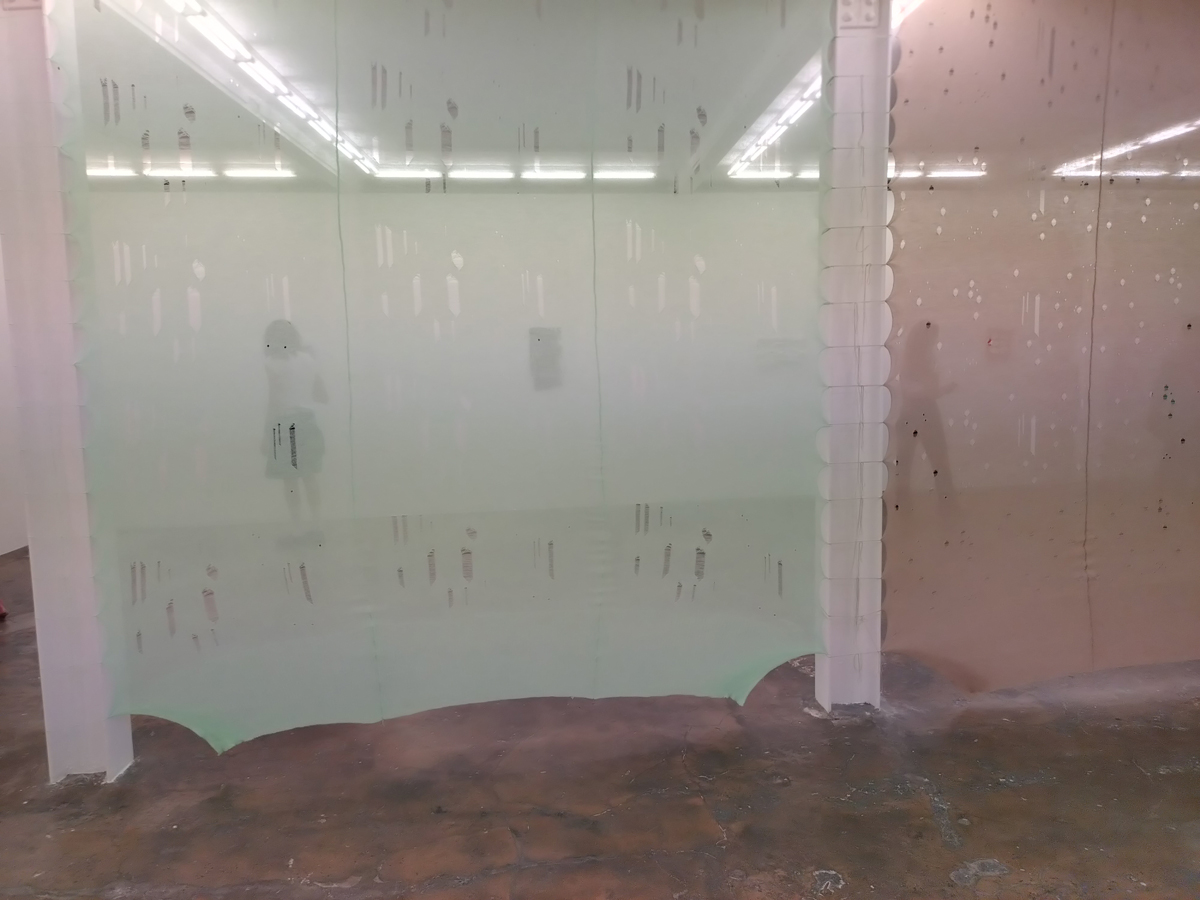
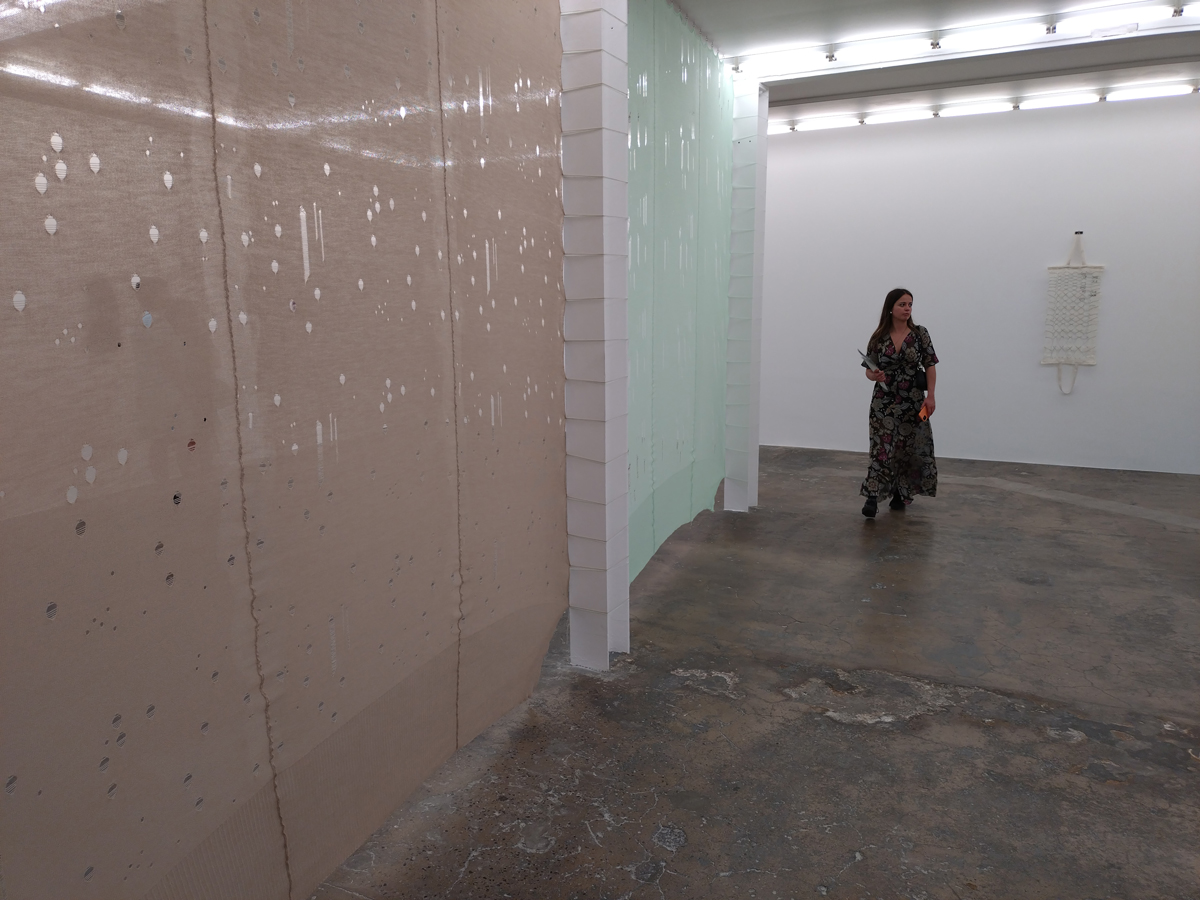
The genesis might be in her various acts of destruction but this is as much about reconstruction, the putting back together in a way that is a little more than just decoration. There’s much suggested here. An imagination, a re-imagination if you like, a purpose. The large panels of knitted fabric stretched between the architectural features in the middle of the gallery are particularly rewarding, once again space used well (I colud stand here for hours looking through)
.
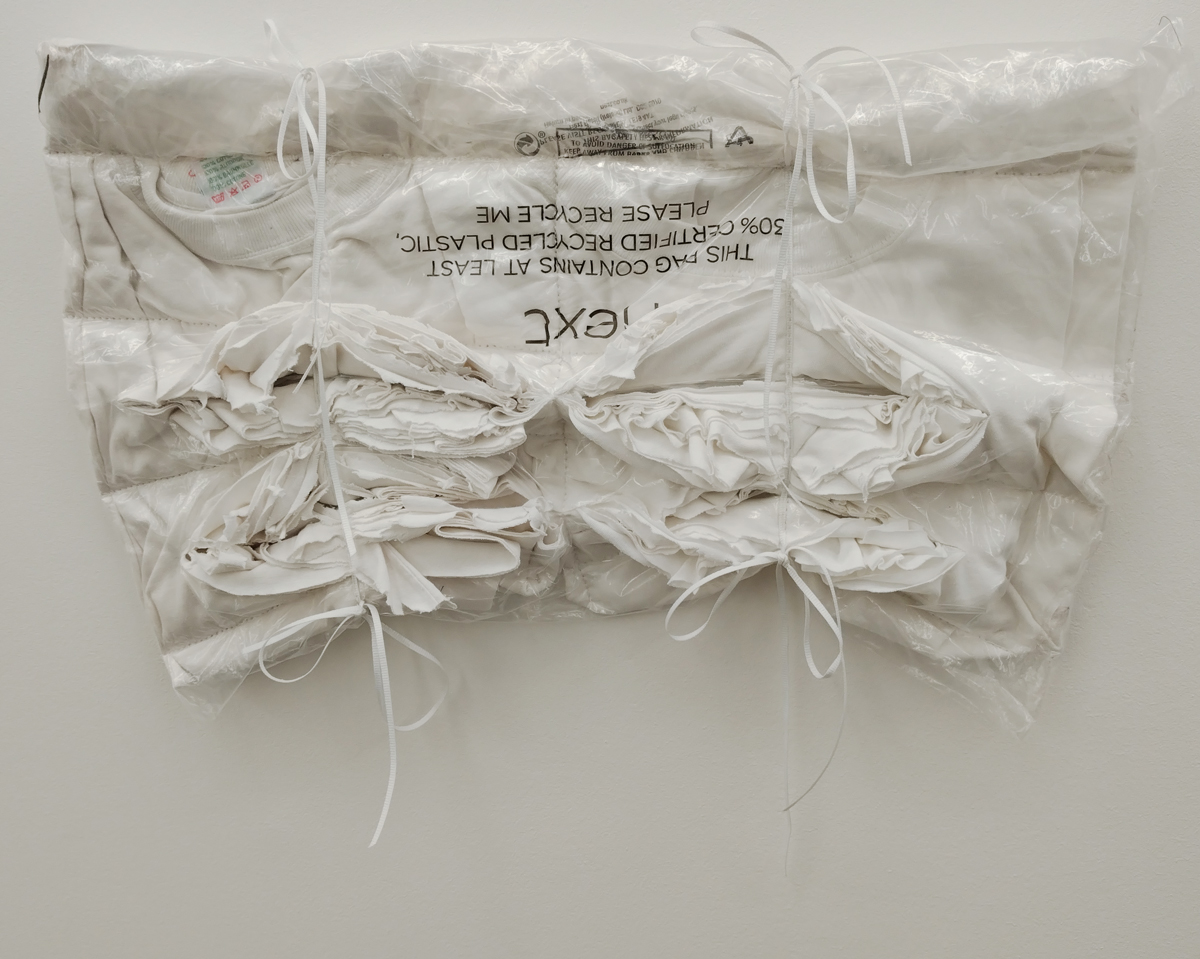
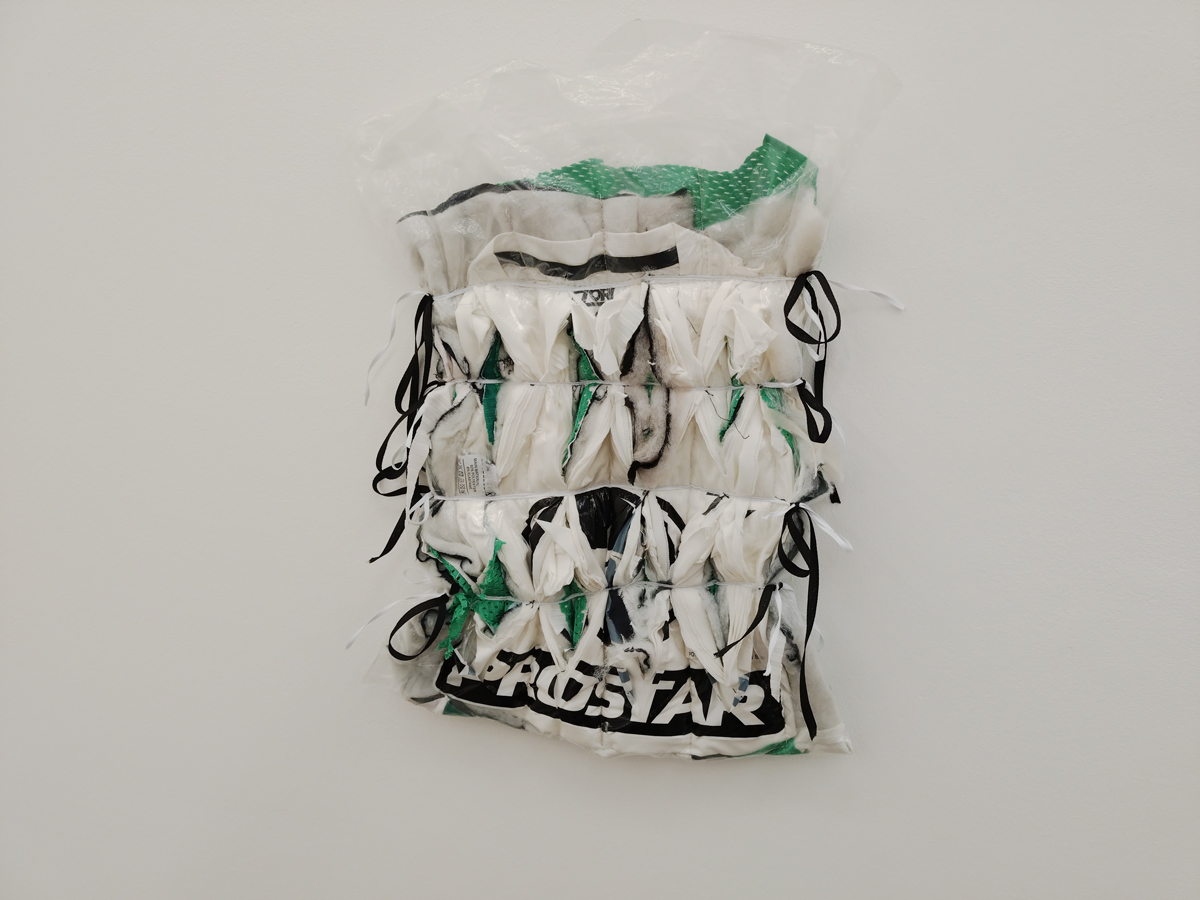
The works in Ladder incorporate features that reference decoration, either via symmetry, colour or adorning hardware. In the series Haul, Tenant of Culture slices and reconfigures garments stored in packaging materials using stitch. The sealed plastic bags suggest that destruction occurred prior to opening, while the repetitive method of slicing instead implies a carefully planned aesthetic act. Mimicking the ‘slashed sleeve’ decorative technique popular in the 16th century, the slashes are stitched open and decorated with ribbons and rivets that keep the damage in place, transforming the unpackaged item into a functionless object and eradicating its use value. Locating the works in contemporary shopping practices, the series Haul specifically refers to the online clothing market by incorporating the packaging of the industry’s most well-known e-tailers.
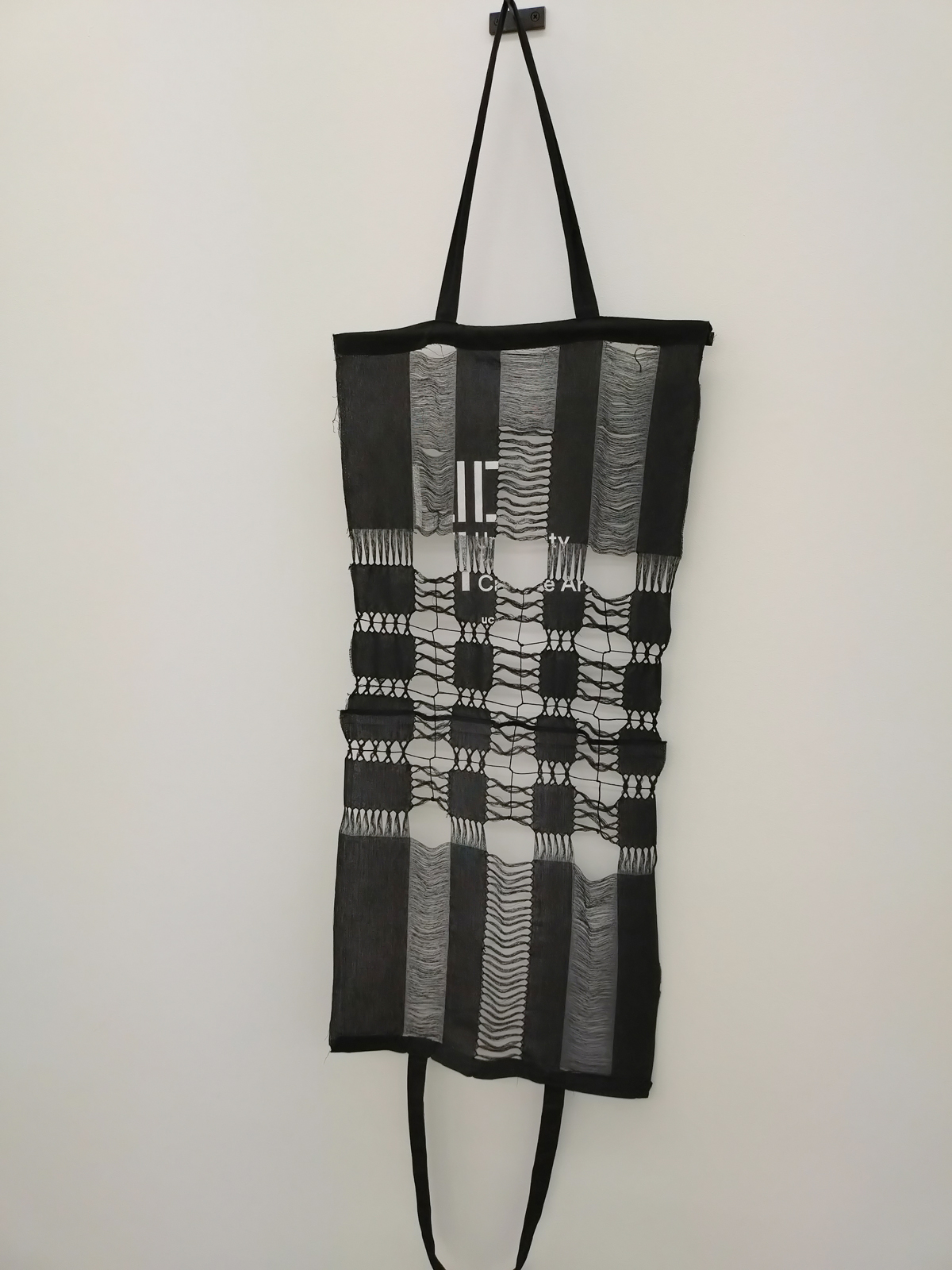
In the series Drawn, the artist artificially creates ladders and rips in deconstructed canvas tote bags, through a meticulous removal of warp and weft threads, followed by their reconfiguration via open work embroidery into a lace-like pattern. Drawn thread and cut-work are some of the earliest forms of embroidery and the technique was often used to re-create a cheaper version of the more costly handmade lace, utilising removal and undoing as a method to create a highly decorative and elaborate new textile. The tote bag symbolically represents another preoccupation of the contemporary shopping experience, where eco-conscious shoppers use the canvas bag as a sustainable alternative to single-use plastics. To tote, which means to lug or carry, again makes a reference to the transportation of goods – These large-scale site-specific works simultaneously reference a renowned jumper designed by Rei Kawakubo for Comme des Garçons in the late 1980s, for which Kawakubo intentionally sabotaged knitting machines to create gaping holes. Made by a similar machine pre-programmed to introduce areas of faux damage…
Ladder is a strong show, an exhibition that makes several points without ever needing to hit you over the head with any of them and weaving has always been exciting, pulling weaving apart or letting it lead the artist certainly has. Not that ant of the work here feels in anyway under the control of anyone or anything other than the artist herself (them looms have minds of their own!).
As pure pieces of visual art these pieces excite, as commentary these pieces are powerful. We got accused of liking everything we go to on this pages, far from the truth, most of the shows we go to we choose not to bother covering, when we encounter something we think worth our time and yours we say so. This is one of those shows… (sw)
Tenant of Culture is the artistic practice of Hendrickje Schimmel (b. 1990, Arnhem), who lives and works in London. The artist’s most recent solo exhibition IN SITU was held at Museum of Contemporary Art, Antwerp (2023). Prior to this, the artist’s first UK institutional solo exhibition, Soft Acid opened last year at Camden Art Centre, London (2022). Soft Acid will be exhibited this year as part of the British Textile Biennial 2023.
Soft Opening is found at 6 Minerva Street, London E2 9EH. The gallery is open Wednesday through to Saturday, midday until 6pm, Ladder runs until October 21st
Asalways, please do click on an image to see the whole thing or t orun the slide show,,,,











 THE ORGAN
Leave a reply to ORGAN: Frieze Week, the obligatory top ten, Leilah Babirye, Fabian Knecht, that spot of red paint on a boot, Josèfa Ntjam at NıCOLETTı, that Ibez, Tenant of Culture, Michael Seri and… | THE ORGAN Cancel reply